Best Landing Page Builder for Indie Game Devs in 2026
Indie game devs waste weeks on landing pages that convert nobody. Here's what actually works in 2026, and why your App Store reviews are the best copy you already have.

Cyrus
You shipped the game. Now you need a page that sells it. Most indie game devs spend two weeks in Figma and end up with something that converts at 1.2%.
There's a shorter path.
The real problem isn't the builder, it's the copy
Every landing page builder will let you drag a hero section around. That's not your bottleneck. Your bottleneck is knowing what to say. Indie game devs almost always write landing page copy from the developer's perspective: "procedurally generated dungeons", "physics-based puzzles", "hand-crafted pixel art". Players don't search for that. They search for "addictive puzzle game I can play for five minutes".
The copy that actually converts is already written. It's sitting in your App Store and Google Play reviews. Real players, in their own words, describing why they kept playing. "I stayed up until 2am because I couldn't stop" is worth more than any feature bullet you write yourself.
Mine that before you touch a single builder.
What indie game devs actually need from a landing page builder
Most builders are built for SaaS or e-commerce. They assume you have a marketing team, a brand kit, and three weeks. You have none of those things. Here's what you actually need:
Speed: you should be live in under an hour, ideally under ten minutes
Mobile-first output: your traffic comes from phones, not desktops
App Store badge integration: iOS and Google Play download buttons, not a generic CTA
Review display: real quotes from real players, not stock testimonials
Custom domain: yourpuzzlegame.com, not yourgame.framer.app
Anything that doesn't check all five is making your life harder for no reason.
The builders most game devs try first
Framer looks beautiful and the community templates are genuinely impressive. But you'll spend four hours customizing a template someone else designed for a productivity app. The CMS is powerful if you know what you're doing. Most solo devs don't, and the learning curve is real. Pricing starts at $5/month for a single site on a custom domain, but the templates worth using cost extra.
Webflow is even more powerful and even more of a time sink. It's a career, not a tool. Skip it unless you already know it.
Carrd is fast and dirt cheap at $19/year. It's also limited enough that you'll hit a wall the moment you want a video background or a review carousel. Good for a holding page. Not good for a conversion page.
Notion + Super.so works if you write well and your audience expects a minimal aesthetic. Indie game devs rarely benefit from this. Games need energy. Notion pages don't have it.
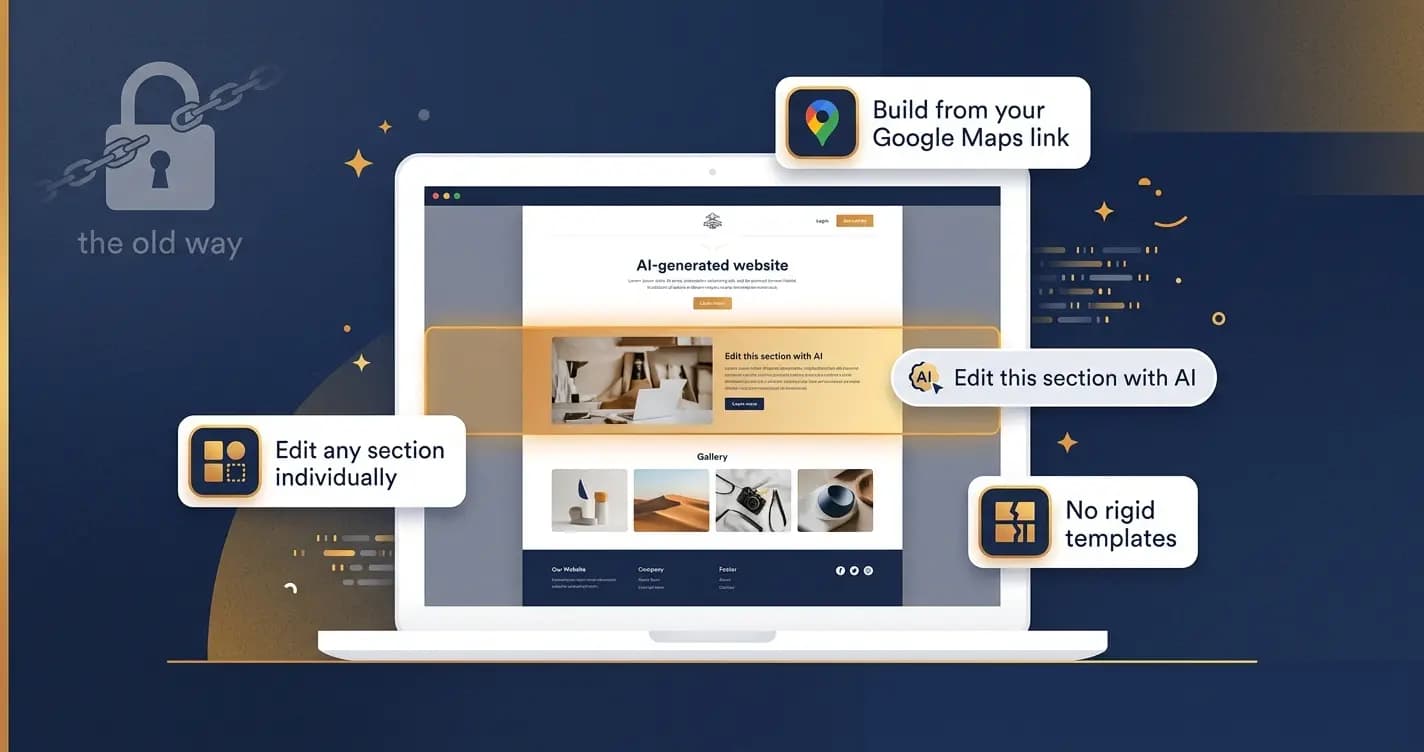
Entro is the one built specifically for mobile apps and games. You paste in your App Store or Google Play URL. It pulls your reviews, your screenshots, and your metadata. Then it generates a full landing page in about 60 seconds. The output is mobile-first, includes App Store and Google Play badges, and shows real player quotes formatted as social proof. Custom domains work. The page looks like it was designed by someone who has shipped apps before, because the product was built by people who have.
For an indie game dev who needs a page live before a ProductHunt launch, that difference matters.
What to look for in the generated output
Whether you use Entro or anything else, the output needs to pass a five-second test. Show the page to someone who has never heard of your game. Ask them what the game does and who it's for. If they can't answer in five seconds, the hero section failed.
For games specifically, watch for these common mistakes:
Hero headline that names the game but doesn't communicate the genre or hook. "Voidrift" tells me nothing. "A roguelike that punishes every mistake" tells me everything.
Screenshots that show UI instead of gameplay. Players want to see the action, not your settings menu.
No social proof above the fold. If you have 4.8 stars and 2,000 reviews, that number should be visible before the first scroll.
A single download button instead of two. Always include both App Store and Google Play badges. You're leaving installs on the table otherwise.
If you're unsure how to sequence your screenshots for maximum impact, the decisions you make choosing which screenshots appear above the fold follow the same logic as your App Store listing.
Speed is a competitive advantage
Most indie game devs treat the landing page as the last thing before launch. It should be the second thing, right after you have a testable build. Here's why: you can start driving traffic to a landing page six weeks before launch and collect emails. Those emails are your day-one install spike. That spike moves your App Store ranking. That ranking drives organic discovery.
A builder that gets you live in ten minutes means you start collecting emails six weeks earlier. That compounds. A builder that takes three weeks means you launch cold.
The best landing page builders for mobile app developers in 2026 all understand this. The ones that don't are still selling to agencies.
The verdict
If you already know Framer or Webflow, use it. The learning curve is already paid. If you're starting from zero, Carrd works for a holding page, but you'll outgrow it fast. For a full conversion page that pulls from your existing App Store presence and gets live before you finish your coffee, Entro is the fastest path from shipped game to traffic-ready page.
Your reviews are already written. Your screenshots already exist. The copy problem is already solved. You just need a builder that knows how to use what you have.
What to do next: if you want a side-by-side breakdown of the major builders across pricing, generation speed, and custom domain support, the full comparison at best landing page builders for mobile app developers covers everything in one place. If you're ready to stop comparing and start converting, paste your App Store URL into Entro and see what comes out.
Written by
Cyrus
Head of Marketing, Entro
Cyrus writes about mobile app marketing, ASO, and conversion optimization. He's spent the last 3+ years helping indie developers and startup founders get more downloads from organic channels, without paid UA budgets.
Before Entro, he ran growth for two consumer apps that together passed 500,000 downloads on the App Store. Most of what he writes comes from mistakes made with his own money first.
Related articles