7 Best Website Builders for Ecommerce in 2026 (Ranked by What Actually Sells)
I helped migrate an online store once. We started on a general website builder because the monthly cost was lower and we were not sure the store would take off. When it did, we hit the product limit. Then the order volume limit. Then the payment gateway restrictions that meant we were paying 2.5% in transaction fees on every sale on top of payment processing fees.

Cyrus
I helped migrate an online store once. That is the story I tell every time someone asks me which ecommerce platform to choose.
We started on a general website builder because the monthly cost was lower and we were not sure the store would take off. When it did, we hit the product limit at 200 items. Then the order volume limit. Then the payment gateway restrictions that meant we were paying 2.5% in transaction fees on every sale, on top of payment processing fees, because the platform wanted us to use their native processor that was not available in our market.
Migrating 400 product listings, 2,000 customer records, and 18 months of order history to a new platform took six weeks and a developer. The migration cost more in time and momentum than the cheaper subscription had saved us over the entire time we were on the wrong platform.
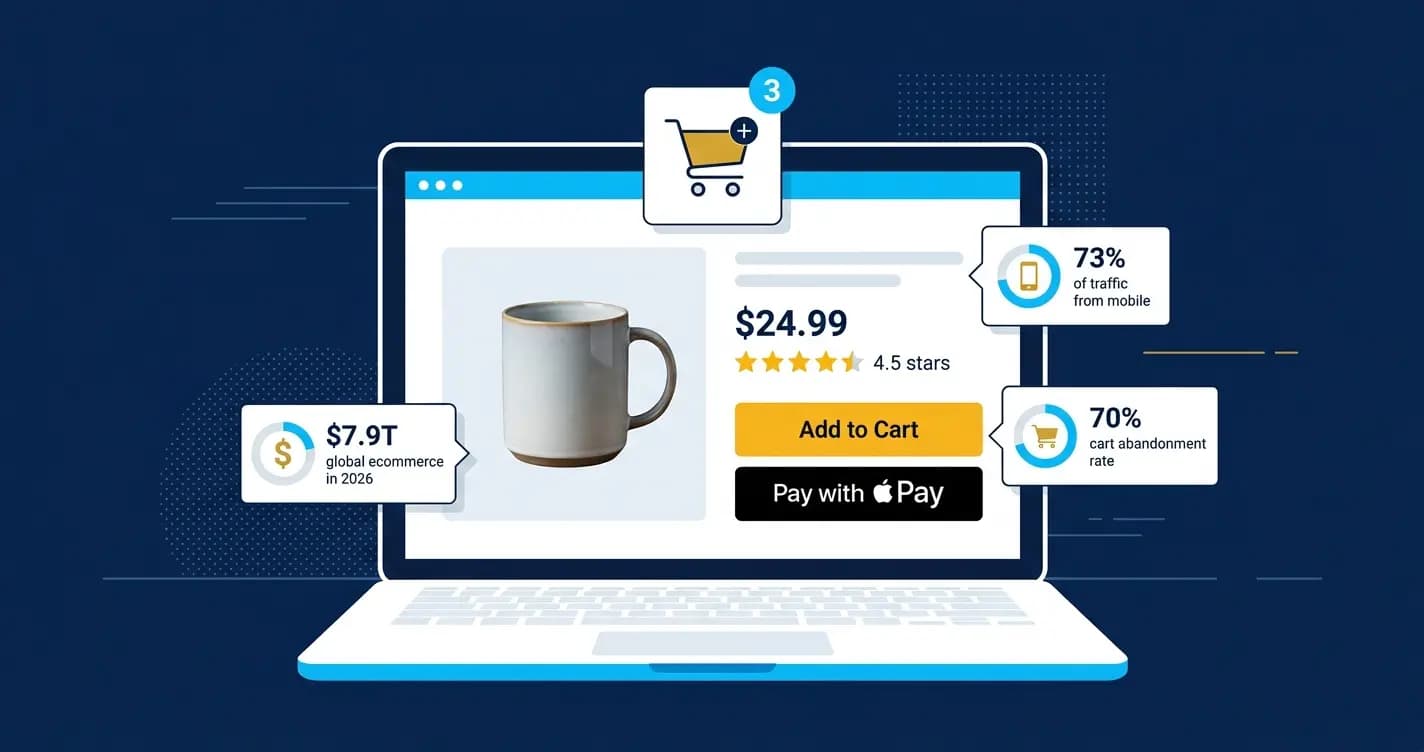
The scale of the mistake compounds with volume. Global ecommerce is projected to reach $7.9 trillion in 2026, growing 10.4% year over year (Digital Applied, 2026). 70% of shopping carts are abandoned before purchase, representing $260 billion in recoverable revenue in the US and EU alone (Baymard Institute via Digital Applied, 2026). And 73% of all ecommerce traffic now comes from mobile devices, which convert at roughly half the rate of desktop (Dynamic Yield, 2026). The platform you choose determines how much of that $7.9 trillion your store can reach, how much of the cart abandonment you can recover, and whether your mobile checkout is losing you sales every hour.
This guide covers 7 ecommerce website builders in 2026, evaluated on the four things that actually determine whether your store makes money: transaction fee structure, checkout conversion features, mobile optimisation, and what happens when your business grows.
The Ecommerce Numbers Every Store Owner Needs to Know in 2026
Statistic | Source | What it means for your platform choice |
Global ecommerce reaches $7.9 trillion in 2026, up 10.4% year-on-year | Digital Applied, 2026 | The market is still growing fast. Getting the platform right now has a compounding return. |
70.22% average cart abandonment rate across all industries | Baymard Institute via Digital Applied, 2026 | Seven out of every ten shoppers who add to cart never buy. Abandoned cart recovery is not optional. |
$260 billion in recoverable revenue from cart abandonment in US and EU | Digital Applied, 2026 | Abandoned cart emails achieve 39% open rates and 10.7% conversion. Platform must support this natively. |
73% of ecommerce traffic comes from mobile, but mobile converts at half the rate of desktop | Dynamic Yield / Shopify, 2026 | Your mobile checkout is your biggest conversion problem. Platform choice determines how solvable it is. |
Mobile cart abandonment rate reaches 80%, vs 67% on desktop | Dynamic Yield, 2026 | One-tap payments (Apple Pay, Google Pay) reduce mobile abandonment by 35%. Must be natively supported. |
BNPL reduces cart abandonment by 20% for orders over $100 | Digital Applied, 2026 | Buy Now Pay Later is now a standard checkout feature for stores with average order values above $100. |
WooCommerce powers 33% of all online stores worldwide in 2026 | W3Techs, 2026 | The most widely deployed ecommerce platform is not Shopify. It is free and runs on WordPress. |
The Transaction Fee Calculation Nobody Shows You
Most ecommerce platform comparisons focus on the monthly subscription price. That is the wrong number to compare. The number that actually determines your monthly cost is transaction fees, and the difference between platforms is larger than most store owners realise before they are already committed.
Scenario | Platform | Monthly revenue | Transaction fee rate | Fee cost per month | Subscription | Total monthly cost |
Using Shopify Payments (US) | Shopify Basic | $10,000 | 0% | $0 | $29 | $29 + payment processing |
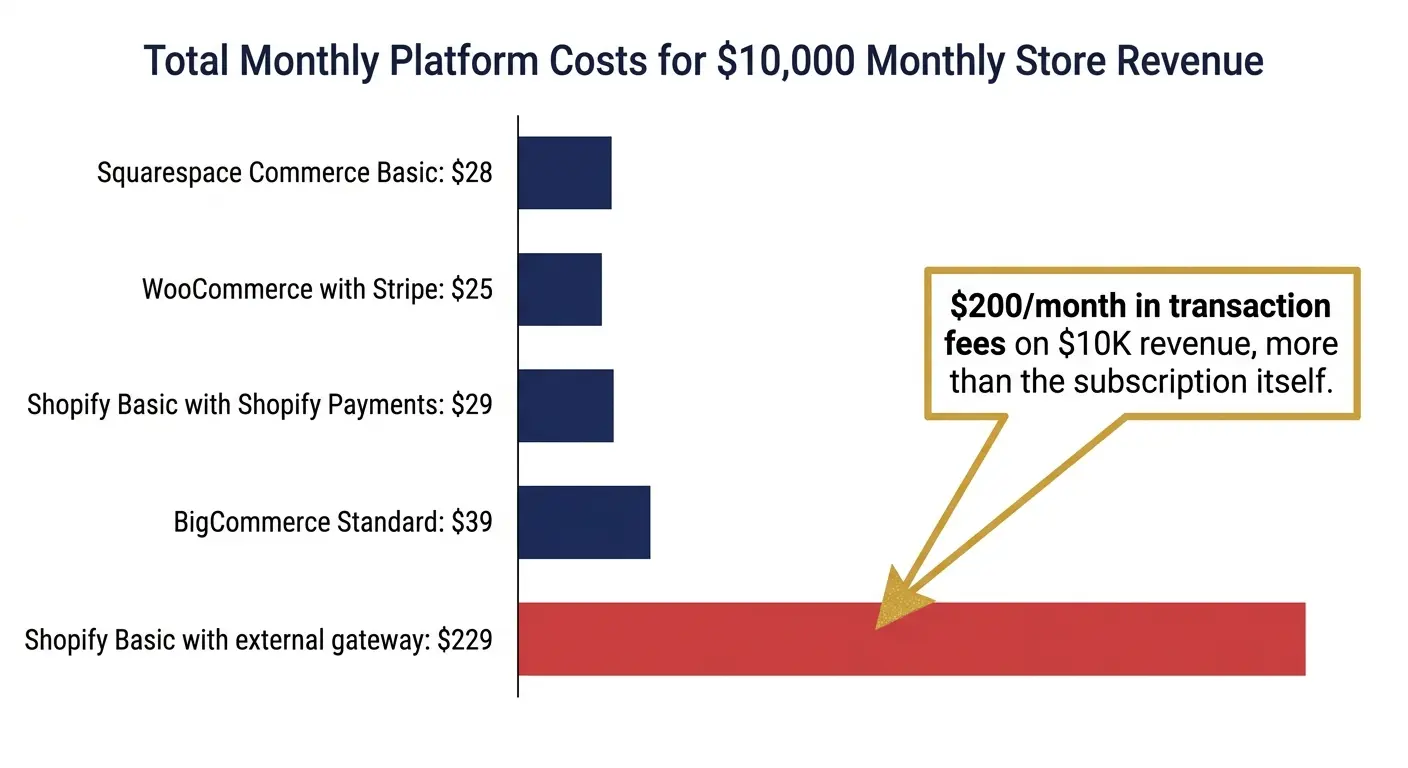
Using external gateway on Shopify Basic | Shopify Basic | $10,000 | 2% | $200 | $29 | $229 + payment processing |
Using external gateway on Shopify Plan | Shopify Plan | $10,000 | 1% | $100 | $79 | $179 + payment processing |
WooCommerce with Stripe | WooCommerce | $10,000 | 0% | $0 | Hosting only | $15 to $30 + payment processing |
BigCommerce (any plan) | BigCommerce | $10,000 | 0% | $0 | $39 to $399 | $39 + payment processing |
Squarespace Commerce | Squarespace | $10,000 | 0% | $0 | $28 to $52 | $28 + payment processing |
Wix Business | Wix | $10,000 | 0% | $0 | $36 | $36 + payment processing |
The lesson: on $10,000 per month in revenue, using an external payment gateway on Shopify Basic adds $200 per month in transaction fees. That is $2,400 per year, more than the subscription cost itself. Always calculate your total monthly cost including transaction fees at your expected revenue level before choosing a platform. Shopify Payments eliminates these fees but is only available in certain countries. If you are outside those markets, BigCommerce, WooCommerce, and Squarespace Commerce all charge 0% transaction fees regardless of which payment provider you use.
Choosing Your Platform by Store Type: What You Sell Determines Where You Sell It
The most common mistake in ecommerce platform selection is choosing based on name recognition rather than store type. A platform that is excellent for a fashion brand selling 200 SKUs is actively wrong for a B2B supplier selling 50,000 SKUs with custom pricing. Here is the match.
Store type | Primary platform need | Recommended platform |
Fashion, lifestyle, and design-led brands | Product photography display, brand aesthetics, Instagram and TikTok Shop integration | Shopify or Squarespace Commerce |
High-volume product retailers (1,000 plus SKUs) | Inventory management, bulk import, multi-channel selling, POS integration | Shopify or BigCommerce |
Handmade, artisan, and maker businesses | Design-forward templates, Etsy channel integration, low transaction fees, commission-free selling | Shopify (Etsy integration) or Squarespace Commerce |
B2B and wholesale businesses | Custom pricing per customer, quote requests, net payment terms, bulk order management | BigCommerce (best native B2B features) |
Content-driven stores (blog plus shop) | Strong blogging and SEO, WooCommerce integration, full content ownership | WooCommerce on WordPress |
Stores adding ecommerce to an existing website | Adding a shop without rebuilding, platform-agnostic solution | Ecwid or Shopify Buy Button |
Budget-conscious new stores | Zero or near-zero monthly cost, unlimited products, basic selling features | WooCommerce (free) or Ecwid free plan |
Best Ecommerce Website Builders at a Glance
Best Overall Shopify Most complete ecommerce infrastructure, 8,000 plus app ecosystem From $29/month | Best Design-Led Stores Squarespace Commerce Best product photography display, 0% transaction fees From $28/month |
Best for B2B and Scale BigCommerce 0% transaction fees, best native B2B features, annual sales thresholds From $39/month | Best Free Option WooCommerce Powers 33% of all online stores, free plugin, 0% platform fees Free + hosting |
Best Budget All-in-One Wix eCommerce 0% transaction fees, most design flexibility in general builders From $29/month | Best for Adding a Shop Ecwid by Lightspeed Add a working store to any existing website without rebuilding Free to $19/month |
Quick Comparison: All 7 Platforms
Platform | Transaction fee | Abandoned cart | Mobile checkout | Multi-channel | B2B features | Starting price |
Shopify | 0% (Shopify Payments); 0.5 to 2% external | Yes (all plans) | Excellent | Best on list | Via apps | $29/month |
Squarespace Commerce | 0% | Yes (Commerce) | Very Good | Instagram, Google | Limited | $28/month |
BigCommerce | 0% all plans | Yes | Good | Excellent | Best native B2B | $39/month |
WooCommerce | 0% (gateway fees apply) | Via plugins | Depends on theme | Via plugins | Via plugins | Free + hosting |
Wix eCommerce | 0% | Business plan up | Good | Facebook, Instagram | Basic | $29/month |
Ecwid | 0% | Via integration | Good | Instagram, TikTok, Amazon | Basic | Free / $19/month |
Hostinger + WooCommerce | 0% | Via plugins | Depends on theme | Via plugins | Via plugins | From $3/month |
Detailed Reviews: Every Platform Tested
Every review covers what the platform does better than the others, where it falls short, and who it is not right for. The goal is to find your answer in one read.
1. Shopify
1. Shopify Best overall ecommerce platform for most online stores | |
Shopify powers more online stores than any other hosted platform and its lead over competitors has grown in 2026. The reason is not any single feature. It is the combination of reliable infrastructure, the largest ecommerce app ecosystem available (over 8,000 apps), the most mature multi-channel selling integration, and a checkout experience that has been optimised for conversion over more than 15 years. When Shopify makes a change to the checkout flow, it tests across millions of stores. No other platform has that scale of conversion data. | |
The transaction fee structure is the most important thing to understand before choosing Shopify. If you use Shopify Payments (available in the US, UK, Canada, Australia, and most of Europe), transaction fees are zero across all plans. If you use any other payment provider, you pay 2% on Basic, 1% on the Shopify plan, and 0.5% on Advanced. On $10,000 of monthly revenue, the Basic plan with an external gateway costs $200/month in transaction fees on top of the $29 subscription. Calculate this for your expected revenue and payment provider before committing. | |
The abandoned cart recovery at 39% email open rates (Swell, 2026) is included on all Shopify plans. The mobile checkout includes one-tap Apple Pay and Google Pay natively, which is the single biggest lever available for reducing the 80% mobile cart abandonment rate. Buy Now Pay Later through Shop Pay Installments is available on Shopify in supported markets. Multi-channel selling across Instagram, TikTok Shop, Facebook, Amazon, eBay, Walmart, and Google Shopping is managed from one dashboard. For a store where selling is the primary function, Shopify is built for exactly that. | |
Pros | Cons |
Most complete ecommerce infrastructure of any hosted platform | Transaction fees of 0.5 to 2% if not using Shopify Payments (not available in all countries) |
8,000 plus app ecosystem: the largest ecommerce app store available | App costs can significantly increase the real monthly cost beyond the subscription |
Multi-channel selling: TikTok Shop, Instagram, Amazon, eBay, Walmart, Google from one dashboard | Blog and content tools less developed than WordPress for SEO-driven content strategies |
Abandoned cart recovery on all plans: 39% email open rate average | Shopify Payments country availability is the most common reason to evaluate alternatives |
Apple Pay and Google Pay natively: reduces mobile abandonment by 35% |
|
Shop Pay Installments (BNPL): reduces abandonment by 20% on orders over $100 |
|
Not right for you if: Shopify Payments is not available in your country. If you are in a market where Shopify Payments is unavailable, the transaction fees on an external gateway make BigCommerce or WooCommerce a significantly better financial choice at any meaningful revenue level. | |
Our verdict: The default answer for most online stores. The infrastructure, app ecosystem, and checkout optimisation are the most mature available. The transaction fee structure is the only reason to choose something else. | |
Pricing: $29/month (Basic). $79/month (Shopify). $299/month (Advanced). 3 months at $1/month trial available. Shopify Payments eliminates transaction fees in supported markets. Best for: Most online stores, especially those planning to grow significantly, sell across multiple channels, or are in markets where Shopify Payments is available. | |
2. Squarespace Commerce

2. Squarespace Commerce Best ecommerce website builder for design-led brands and visual product categories | |
Squarespace Commerce is what you use when how your products look is a primary factor in whether people buy them. Jewellery, ceramics, fine art, candles, fashion, home goods, food products: categories where the product photography and the brand aesthetic are as important as the price benefit from Squarespace's templates in a way that Shopify's themes do not match by default. The Commerce plans include zero transaction fees, unlimited products, abandoned cart recovery, and Instagram Shopping integration. | |
The product page templates in Squarespace are the best-looking of any platform on this list. The image galleries allow multiple angles, the zoom functionality preserves quality, and the layout options give designers control over how products are presented without requiring a developer. Blueprint AI in 2026 generates a coherent starting store design from a description of your brand in under 15 minutes, which is the right starting point for a maker or small brand that knows what they want but has not built a website before. | |
The honest trade-off compared to Shopify: Squarespace Commerce is less scalable for high-volume stores. The app ecosystem is smaller. The multi-channel selling options (Instagram and Google Shopping, but not Amazon, TikTok Shop, or eBay natively) are more limited. The inventory management is less capable for stores with complex variant structures or large catalogues. Squarespace Commerce is the right choice when the store has under 500 products, brand aesthetics are a conversion factor, and multi-channel volume is not the primary growth strategy. | |
Pros | Cons |
Best product photography display and brand-forward store design of any platform | Less scalable than Shopify for high-volume stores or complex inventory |
Zero transaction fees on all Commerce plans | Multi-channel selling more limited: no native Amazon, TikTok Shop, or eBay |
Abandoned cart recovery included on Commerce plans | App ecosystem significantly smaller than Shopify for ecommerce-specific tools |
Blueprint AI for fast, brand-coherent store design from a brief | Template cannot be changed once the store is live without rebuilding |
Instagram Shopping and Google Shopping integration native |
|
14-day free trial before committing to a plan |
|
Not right for you if: you are selling more than 500 products, need multi-channel selling across Amazon or TikTok Shop, or your store growth depends on volume rather than brand differentiation. Shopify is the right platform for that model. | |
Our verdict: The right choice for design-led brands where aesthetics are a conversion factor. Zero transaction fees, beautiful product pages, and Blueprint AI make it the fastest route to a professional-looking online store for visual product categories. | |
Pricing: Commerce Basic $28/month. Commerce Advanced $52/month. 14-day free trial. Best for: Fashion brands, makers, jewellers, ceramics sellers, home goods brands, and any store where product photography is the primary conversion driver. | |
3. BigCommerce
3. BigCommerce Best ecommerce platform for high-volume stores and B2B businesses | |
BigCommerce's competitive position in 2026 is built on three things that most store owners at scale eventually need: zero transaction fees on every plan regardless of payment provider, the most capable native B2B features of any platform on this list, and no artificial product limits. On $50,000 per month in revenue using an external payment gateway, the difference between Shopify's 1% transaction fee (Shopify plan) and BigCommerce's 0% is $500 per month, $6,000 per year. | |
The B2B features are what separate BigCommerce from every other platform on this list for wholesale and trade businesses. Customer group pricing means different customers see different prices when they log in. Quote management allows customers to request pricing on large orders. Payment term management supports net-30 and net-60 invoicing natively. Purchase order support and custom tax settings for different customer classes are all included without apps. For a business that sells both direct-to-consumer and wholesale, BigCommerce handles both from one platform without a separate B2B platform subscription. | |
The honest trade-off is the annual sales threshold system. BigCommerce plans have annual GMV (gross merchandise volume) caps: Standard is $50,000 per year, Plus is $180,000, and Pro is $400,000. If your store exceeds the cap, you are automatically upgraded to the next plan tier. For stores with predictable, moderate growth, this is manageable. For stores with seasonal spikes (a toy store at Christmas, for example) that could temporarily push past a threshold, the plan jump timing can be a surprise. Calculate your expected annual GMV against the plan thresholds before choosing a plan. | |
Pros | Cons |
Zero transaction fees on all plans regardless of payment provider | Annual GMV thresholds: exceeding them triggers automatic plan upgrade |
Best native B2B features: customer group pricing, quote management, net payment terms | Less design-forward than Squarespace out of the box for brand-led stores |
No product limits on any plan | Smaller app ecosystem than Shopify for niche ecommerce tools |
Strong multi-channel selling: Amazon, eBay, Google Shopping, Facebook, Instagram | Learning curve steeper than Shopify or Squarespace for non-technical store owners |
Best built-in analytics and reporting of any platform tested |
|
Not right for you if: you are a small store doing under $50,000 per year in GMV without B2B selling requirements. Shopify or Squarespace is a simpler and better-value platform at that scale. | |
Our verdict: The right platform for stores doing significant volume, businesses with wholesale or B2B customers, and any store where Shopify Payments is unavailable and transaction fees on an external gateway would make Shopify expensive. | |
Pricing: Standard $39/month ($50,000 annual GMV). Plus $105/month ($180,000 GMV). Pro $399/month ($400,000 GMV). 15-day free trial. Best for: High-volume retailers, B2B and wholesale businesses, and stores in markets where Shopify Payments is not available. | |
4. WooCommerce
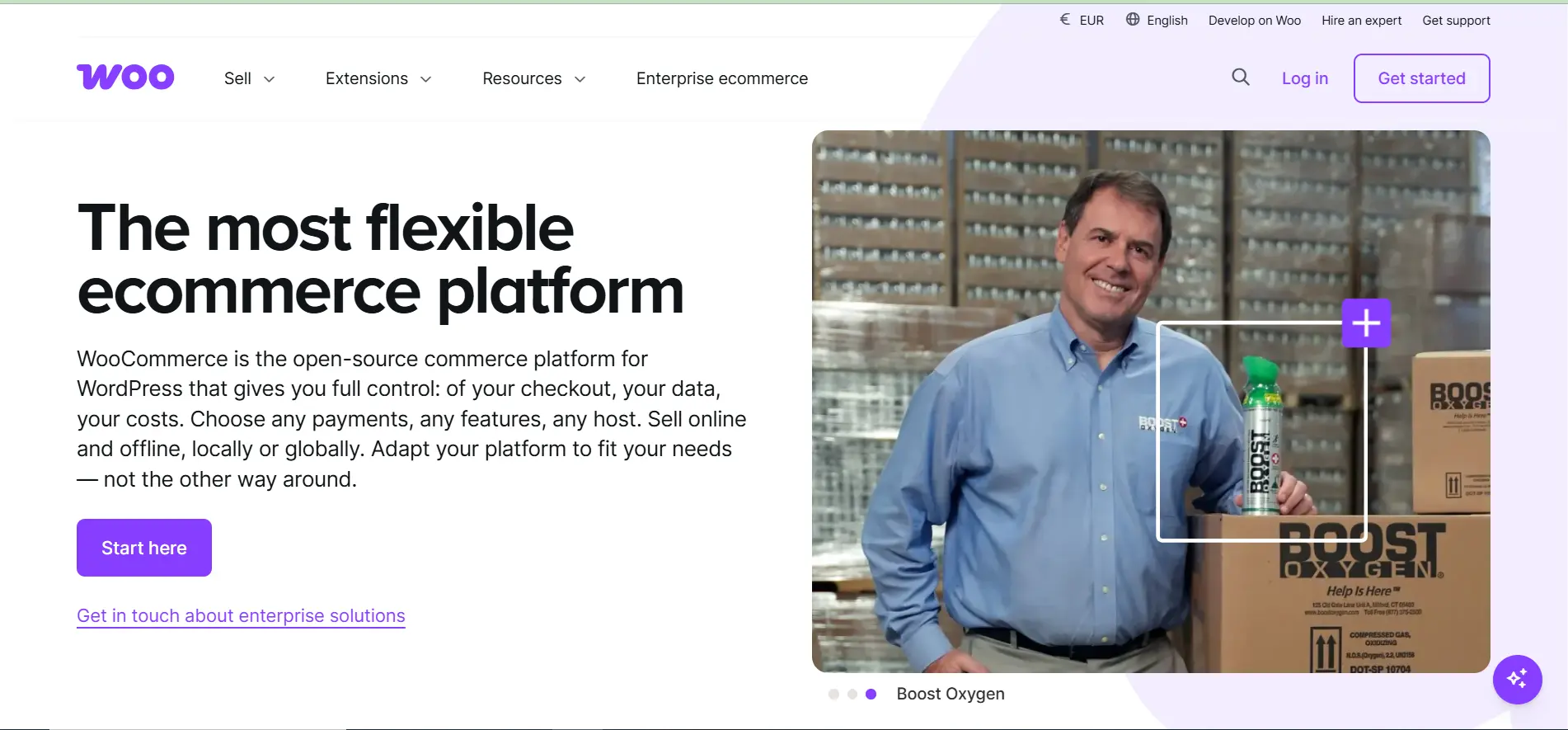
4. WooCommerce Best ecommerce platform for stores that need complete control and the lowest long-term cost | |
WooCommerce powers 33% of all online stores worldwide in 2026 (W3Techs) and the reason is not inertia. It is the only platform on this list where the core ecommerce software is free, the transaction fee is zero, and you own every piece of your data with no lock-in. A WooCommerce store on a $15/month hosting plan pays $180 per year for infrastructure. A Shopify store at $29/month pays $348 per year before transaction fees. At $50,000 per year in revenue on Shopify with an external gateway, the difference between platforms is several thousand dollars annually. | |
The content and SEO advantage is significant for stores that rely on organic search. WooCommerce runs on WordPress, which means the blogging, content, and SEO infrastructure is the strongest available. A furniture store that ranks for 'modern dining tables under $500' through long-form content, a supplement brand that publishes ingredient guides that rank in search, or any store where content drives product discovery benefits from the WordPress SEO infrastructure in a way that Shopify's less capable blog cannot match. | |
The honest cost of WooCommerce is time, not money. Hosting selection, WordPress configuration, WooCommerce setup, payment gateway connection, security monitoring, plugin updates, and performance optimisation are all the store owner's responsibility. For a non-technical store owner who wants to be selling products this week, WooCommerce is not the right starting point. For a technically capable store owner or a business with developer access, the long-term financial advantage and the absence of platform lock-in are genuinely compelling. | |
Pros | Cons |
Zero platform transaction fees, lowest long-term cost of any platform on this list | Most complex setup and ongoing maintenance on this list |
Powers 33% of all online stores in 2026: the most deployed ecommerce software | Security, updates, and performance management are the store owner's responsibility |
Full data ownership and zero lock-in: your store and customer data are fully portable | Support is fragmented across hosting, WooCommerce, and individual plugin providers |
Best SEO and content infrastructure for search-driven stores | No built-in abandoned cart recovery: requires a plugin (CartFlows, Klaviyo, etc.) |
60,000 plus WordPress plugins: no feature limitation that a plugin cannot address |
|
Not right for you if: you need to be selling products this week without technical knowledge. WooCommerce rewards investment in setup. If you are not willing to make that investment or pay a developer to do it, Shopify or Squarespace is the right starting point. | |
Our verdict: The right platform for technically capable store owners and businesses with developer relationships who want the lowest long-term cost, the strongest SEO infrastructure, and complete data ownership. The most powerful platform on the list for the store that earns it. | |
Pricing: WooCommerce plugin: free. Hosting from $10 to $30/month. Payment gateway fees apply. Premium extensions vary. Best for: Technically capable store owners, businesses with developers, content-driven stores, and anyone who values long-term cost efficiency over short-term simplicity. | |
5. Wix eCommerce
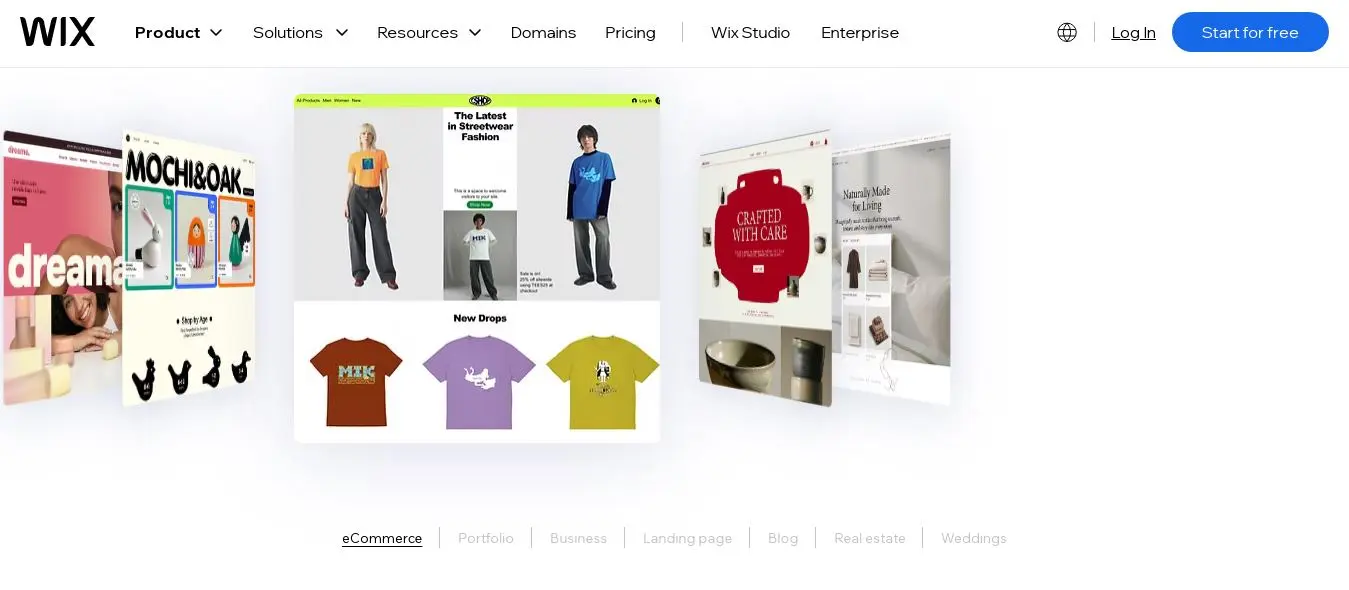
5. Wix eCommerce Best general website builder with solid ecommerce for stores that also need a full website | |
Wix is the most feature-complete general website builder with ecommerce, and that distinction matters for a specific type of store: one that needs the shop to be part of a broader website rather than the whole thing. An interior design studio that sells products alongside a portfolio, a yoga studio that sells merchandise alongside memberships, a photographer who sells prints alongside their booking calendar. For these businesses, the best ecommerce platform is not necessarily the strongest pure ecommerce platform. It is the one that integrates the shop most naturally into everything else the website needs to do. | |
The ecommerce feature set is genuinely capable at the Business plan level: zero transaction fees, abandoned cart recovery, Facebook and Instagram selling, multi-currency, and subscriptions are all included. The Wix App Market extends this with Printful for print-on-demand, Modalyst for dropshipping, and Etsy for marketplace synchronisation. Wix Harmony, the AI-powered assistant launched in 2026, handles product descriptions, meta tags, and email campaign drafts from within the dashboard. | |
The honest limitation compared to Shopify or BigCommerce: Wix eCommerce is not designed for stores where selling is the primary function. The inventory management is less capable for large catalogues. The multi-channel selling options are more limited. The abandoned cart recovery only activates on the Business plan and above. For a store whose entire purpose is selling products, Shopify is a more purpose-built tool. For a store where selling is one of several things the website does, Wix handles it more elegantly than any dedicated ecommerce platform. | |
Pros | Cons |
Zero transaction fees on all ecommerce plans | Abandoned cart recovery only on Business plan ($36/month) and above |
Most flexible design editor of any ecommerce platform on this list | Less capable inventory management than Shopify for large or complex catalogues |
App Market: Printful, Modalyst, Etsy sync, and 300 plus ecommerce apps | Multi-channel selling more limited: no Amazon, TikTok Shop, or eBay natively |
Wix Harmony AI for product descriptions, SEO, and email campaigns (2026) | Template cannot be changed after the store goes live without rebuilding |
Subscriptions, multi-currency, and Facebook and Instagram selling on Business plan |
|
Not right for you if: selling products is the only or primary function of your website. If that is the case, Shopify's infrastructure is more purpose-built and the feature depth at equivalent price points is stronger. | |
Our verdict: Right for businesses where the store is one function among several: portfolio, booking, newsletter, and shop all in one platform. Not the right choice when selling is everything the website exists to do. | |
Pricing: Business $36/month (full ecommerce features). Business Elite $159/month. Ecommerce features from Core $29/month with limitations. Best for: Studios, creative businesses, service providers, and makers who need a shop alongside other website functions. | |
6. Ecwid by Lightspeed
6. Ecwid by Lightspeed Best for adding ecommerce to an existing website without rebuilding it | |
Ecwid solves a specific problem that no other platform on this list addresses: you already have a website that you are satisfied with, and you want to add a working online store to it without rebuilding from scratch. Ecwid is a shopping cart that installs on any existing website, including WordPress, Wix, Squarespace, Webflow, or a hand-coded HTML site. The free plan handles up to 10 products with a working checkout and payment processing at zero monthly cost. That is a genuine free entry point to ecommerce with no tricks. | |
The Venture plan at $19/month removes the product limit and adds abandoned cart recovery, Facebook and Instagram selling, discount coupons, and inventory tracking. The Business plan at $39/month adds Google Shopping, TikTok Shop, Amazon and eBay selling, priority support, and branded emails. Ecwid Zero transaction fees on all plans regardless of payment provider. For a store adding a commerce function to a content site, a service business adding a product line, or a brick-and-mortar store adding online selling to an existing web presence, Ecwid is the most practical solution available. | |
The honest limitation is ceiling. Ecwid is designed to add commerce to an existing website, not to power a store-first business. The product management, inventory, and analytics are less capable than Shopify or BigCommerce at equivalent revenue levels. For a store that starts on Ecwid and grows to significant volume, migration to a dedicated ecommerce platform is a likely eventual outcome. Ecwid makes sense as a starting point or a permanent solution for low-volume stores, not as a platform for building a serious product business. | |
Pros | Cons |
Adds a working online store to any existing website without rebuilding | Product management and analytics less capable than dedicated platforms |
Free plan with up to 10 products, working checkout, and zero transaction fees | Not designed as a primary store-first platform: ecommerce depth is limited |
Venture plan at $19/month adds abandoned cart, Facebook, Instagram, and discount coupons | Migration likely as volume grows: Ecwid is a starting point, not a long-term home for high-volume stores |
Zero transaction fees on all plans regardless of payment provider | Limited design customisation within the embedded store widget |
TikTok Shop, Amazon, eBay, and Google Shopping on Business plan ($39/month) |
|
Not right for you if: you are building a store-first business from scratch. Shopify or WooCommerce is the right foundation for a store where selling is the primary function. | |
Our verdict: The most practical solution for adding a store to an existing website without migration. The free plan and zero transaction fees make it a genuine no-risk starting point for businesses testing online selling. | |
Pricing: Free plan (10 products). Venture $19/month. Business $39/month. Unlimited $99/month. Zero transaction fees on all plans. Best for: Businesses with existing websites who want to add selling without rebuilding, service businesses adding product lines, and brick-and-mortar stores testing online sales. | |
7. Hostinger + WooCommerce
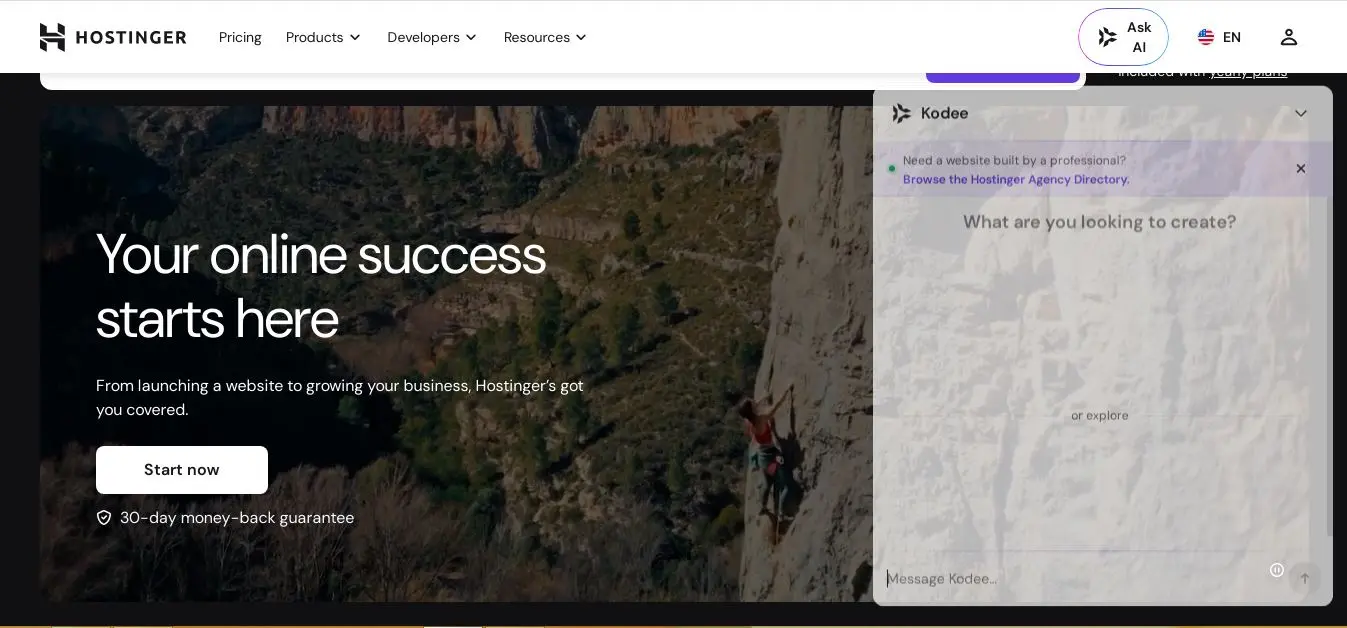
7. Hostinger + WooCommerce Best budget route to a full-featured WooCommerce store | |
Hostinger's managed WooCommerce hosting starts at approximately $3/month and includes one-click WooCommerce installation, free SSL and domain, and optimised server configuration for WordPress. For a store that wants the power and flexibility of WooCommerce without the complexity of selecting and configuring hosting independently, Hostinger's managed plan is the most accessible entry point available. | |
The value proposition is direct: WooCommerce at $3/month versus Shopify Basic at $29/month. At $10,000 per month in revenue with Stripe as the payment processor (2.9% plus $0.30 per transaction), the platform cost difference is $26/month or $312 per year. For a new store testing whether the business works before making a larger platform commitment, that cost difference is meaningful. The AI tools Hostinger includes in 2026, including product description generation and SEO optimisation suggestions, reduce the content work for new stores. | |
The honest trade-off relative to a self-managed WooCommerce setup is support scope: Hostinger's support covers the hosting infrastructure, not the WooCommerce plugin, themes, or third-party plugins. When a WooCommerce conflict or error occurs, the store owner is responsible for diagnosing it. For non-technical store owners, this creates a support gap. For store owners who are comfortable with WordPress and WooCommerce, Hostinger's managed hosting is an excellent value option. | |
Pros | Cons |
From $3/month: lowest entry price for a full WooCommerce store | Support covers hosting only: WooCommerce plugin issues require self-resolution or developer |
One-click WooCommerce installation, no server configuration required | Renewal pricing significantly higher than introductory rate |
AI product description and SEO tools built into the hosting dashboard | Performance tuning and security management are still the store owner's responsibility |
Free SSL and domain included on most plans | Less turnkey than Shopify: more setup decisions to navigate at launch |
Zero platform transaction fees: pay only payment processor fees |
|
Not right for you if: you are not comfortable troubleshooting WordPress or WooCommerce issues independently. If technical problems feel like blockers rather than challenges to solve, Shopify's managed infrastructure and unified support is worth the higher cost. | |
Our verdict: The right budget path to WooCommerce for store owners who are comfortable with WordPress and want the full WooCommerce feature set at the lowest possible monthly cost. | |
Pricing: From $2.99/month (introductory, Business Hosting with WooCommerce). Check renewal pricing before committing to a long-term plan. Best for: Budget-conscious store owners who are comfortable with WordPress and want WooCommerce power at minimum monthly cost. | |
The $260 Billion Problem: How Each Platform Handles Abandoned Cart Recovery
The average cart abandonment rate is 70.22%. Abandoned cart emails achieve 39% open rates and 10.7% conversion rates. A store doing $10,000 per month in completed revenue has roughly $23,000 in abandoned carts. Recovering 10% of that is $2,300 per month in additional revenue. Whether your platform handles this natively matters.
Platform | Abandoned cart recovery | When it fires | Additional cost |
Shopify | Native, all plans | Configurable (1, 6, or 24 hours after abandonment) | Included in all plans |
Squarespace Commerce | Native, Commerce plans | After 24 hours by default | Included in Commerce Basic and above |
BigCommerce | Native, all plans | Configurable | Included in all plans |
WooCommerce | Via plugin (CartFlows, Klaviyo, Metorik) | Configurable per plugin | Plugin cost $0 to $199/year |
Wix eCommerce | Native, Business plan and above | After 1 hour | Included in Business ($36/month) and above |
Ecwid | Venture plan and above | Configurable | Included in Venture ($19/month) and above |
Hostinger + WooCommerce | Via plugin (same as WooCommerce) | Configurable per plugin | Plugin cost $0 to $199/year |
Which Ecommerce Platform Is Right for You
Your situation | Best platform | Key reason |
Store-first business, Shopify Payments available in your market | Shopify | Best infrastructure, app ecosystem, and checkout at 0% transaction fees |
Design-led brand: fashion, jewellery, ceramics, home goods | Squarespace Commerce | Best product photography display and brand-forward store design, 0% fees |
B2B, wholesale, or high-volume store needing 0% fees without Shopify Payments | BigCommerce | 0% fees regardless of payment provider, best native B2B features |
Technical store owner wanting lowest long-term cost and full data ownership | WooCommerce | Free software, 0% platform fees, full control, strongest SEO infrastructure |
Store that is one function alongside portfolio, booking, or content | Wix eCommerce | Best general builder ecommerce: shop integrated naturally with full website |
Adding a shop to an existing website without rebuilding it | Ecwid | Installs on any existing website, free plan, 0% transaction fees |
Budget-conscious, comfortable with WordPress, want WooCommerce power cheaply | Hostinger + WooCommerce | WooCommerce from $3/month, one-click setup, AI product description tools |
Final Note
The store migration that cost six weeks and a developer happened because we chose based on monthly subscription price and ignored the question that actually mattered: what does this platform cost when the business grows? The $200 per month in transaction fees on a $10,000 revenue store on the wrong Shopify plan was not obvious until we were already committed to the platform.
Choose based on three things in this order. First: transaction fees at your expected revenue level and with your available payment providers. Second: the features your store type actually needs (not the longest feature list). Third: what the platform costs when you double your revenue.
The ecommerce market is worth $7.9 trillion in 2026 and growing. The stores that compound on that growth are the ones on platforms that did not force a migration at the moment of highest momentum. Get the platform right before you need to change it.
Frequently asked questions
Shopify is the best overall ecommerce platform for most online stores in 2026, with the most complete infrastructure, the largest app ecosystem, and the most capable multi-channel selling. Squarespace Commerce is the better choice for design-led brands where product photography and aesthetics drive purchases. BigCommerce is the right choice for B2B businesses and stores in markets where Shopify Payments is not available, because it charges 0% transaction fees regardless of payment provider. WooCommerce is the best option for technically capable store owners who want zero platform fees and full data ownership. No single platform is right for every store.
Shopify charges 0% transaction fees if you use Shopify Payments, which is available in the US, UK, Canada, Australia, Ireland, and most of Europe. If you use any other payment provider, the transaction fee is 2% on Basic, 1% on the Shopify plan, and 0.5% on Advanced. On $10,000 per month in revenue, the Basic plan with an external gateway adds $200 per month in transaction fees on top of the $29 subscription. If Shopify Payments is not available in your market, BigCommerce and WooCommerce both charge zero transaction fees regardless of which payment provider you use.
WooCommerce is the best free ecommerce platform: the software itself is free and there are no platform transaction fees. You pay only for hosting (from $10 to $30 per month) and payment processing fees (2.9% plus $0.30 per transaction with Stripe). Ecwid's free plan allows up to 10 products with a working checkout and zero transaction fees, making it the best zero-cost starting point for a very small store. Wix and Squarespace both offer free website plans but neither includes ecommerce features on the free tier.
Shopify is better if you want to be selling products this week, want a single support contact, and are in a market where Shopify Payments is available to eliminate transaction fees. WooCommerce is better if you have technical resources or a developer relationship, want zero platform fees at any revenue level, want the strongest SEO infrastructure for content-driven product discovery, and want complete data ownership with no platform lock-in. The stores that are most successful on Shopify are those that value managed infrastructure. The stores most successful on WooCommerce are those that value control.
The highest-impact changes to reduce cart abandonment are: enable one-tap checkout (Apple Pay and Google Pay), which reduces mobile abandonment by 35%; add Buy Now Pay Later for orders over $100, which reduces abandonment by 20% for that order range; remove surprise costs at checkout (hidden shipping fees are responsible for 48% of abandonments); offer guest checkout (mandatory account creation causes 24% of shoppers to leave); and set up automated abandoned cart email sequences (39% open rate, 10.7% conversion rate). On Shopify, BigCommerce, and Squarespace Commerce, abandoned cart recovery is included in the platform. On WooCommerce, install Klaviyo or CartFlows.
Shopify has the most mature social commerce integration in 2026, with native connections to TikTok Shop, Instagram Shopping, Facebook Shop, Pinterest, Google Shopping, Amazon, eBay, and Walmart all managed from one dashboard. Squarespace Commerce integrates with Instagram Shopping and Google Shopping natively. BigCommerce has strong multi-channel selling across major platforms. Wix eCommerce supports Facebook and Instagram selling. TikTok Shop specifically requires either Shopify (the most integrated experience), BigCommerce, or a TikTok Shop-specific app on WooCommerce.
Written by
Cyrus
Head of Marketing, Entro
Cyrus writes about mobile app marketing, ASO, and conversion optimization. He's spent the last 3+ years helping indie developers and startup founders get more downloads from organic channels, without paid UA budgets.
Before Entro, he ran growth for two consumer apps that together passed 500,000 downloads on the App Store. Most of what he writes comes from mistakes made with his own money first.
Related articles