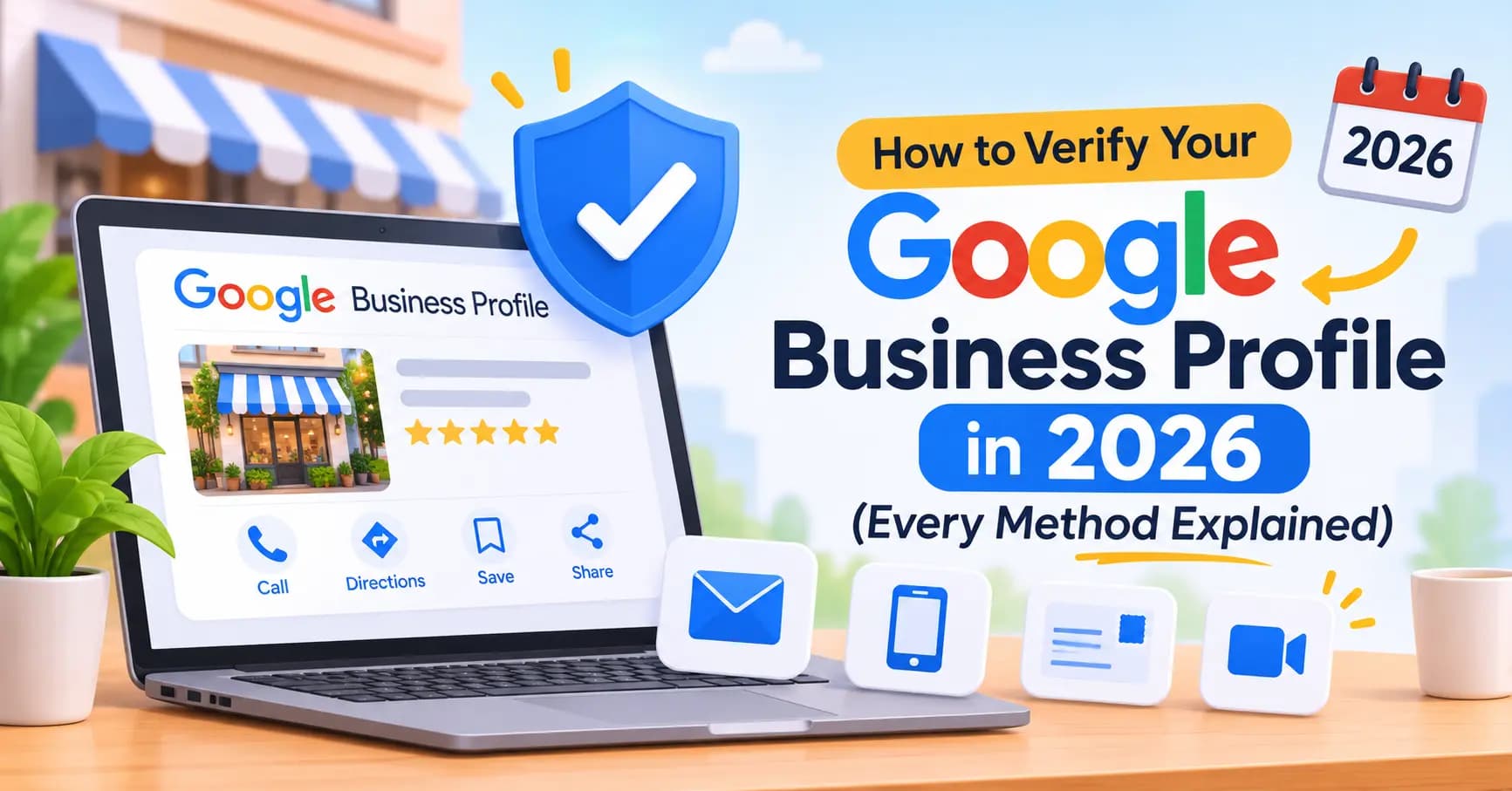
How to Choose a Domain Name for Your Business: 10 Rules That Work
To choose a domain name for your business, start with your business name, keep it short and easy to spell when heard aloud, avoid hyphens and numbers, pick .com or your country extension, and check trademarks before you buy. If your name is taken, add your town or trade.

Cyrus
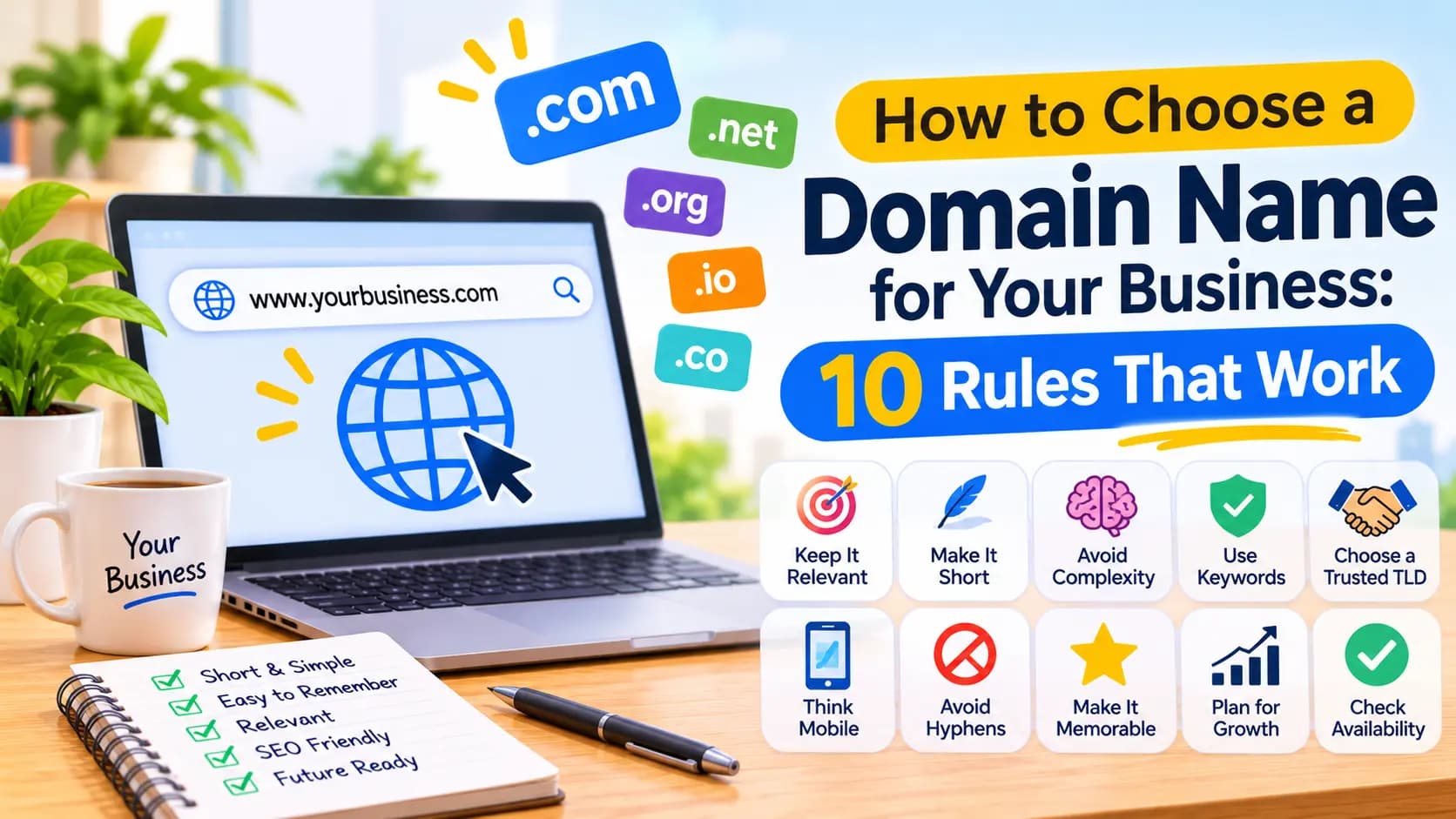
To choose a domain name for your business, start with your business name, keep it short and easy to spell when someone hears it, avoid hyphens and numbers, pick .com or your country extension such as .co.uk or .ca, and check that nobody holds a trademark on it. If your exact name is taken, add your town or your trade, for example riversidebakeryleeds.com. Keywords in the domain give no ranking boost, according to Google's John Mueller, so a clear brand name beats a keyword string. Check availability at a registrar such as Cloudflare, Porkbun, Namecheap or GoDaddy, then connect the name to your site in a builder such as Entro, Wix or Squarespace.
Key takeaways
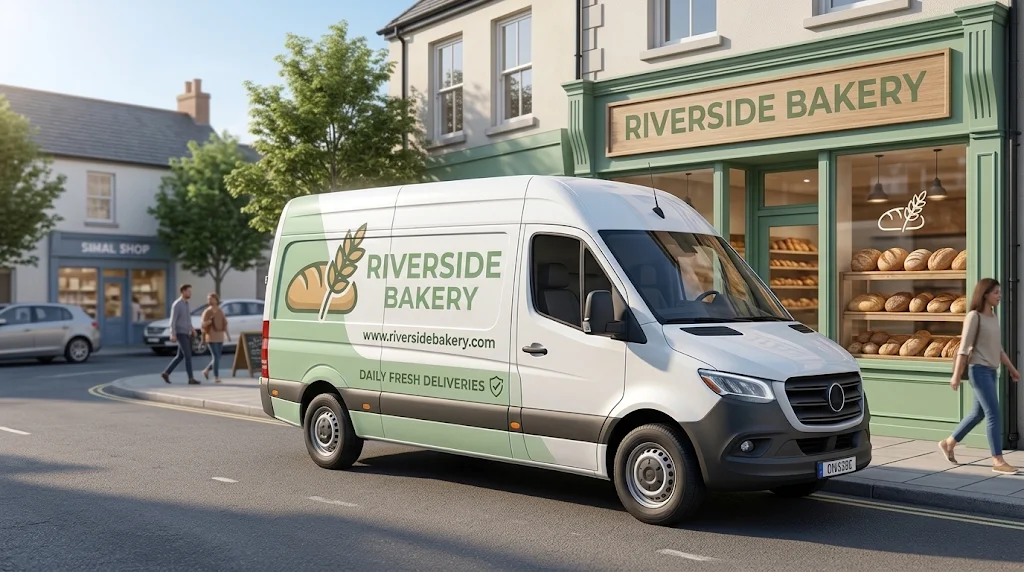
- Your domain should match the name on your sign, your Google profile and your van.
- Short and easy to say beats clever. If you have to spell it out on the phone, rethink it.
- Choose .com or your country domain. .com still holds about 166.6 million registrations, roughly 41% of all domains.
- Keywords in a domain do not help rankings. Your content, reviews and Google profile do.
- No hyphens, no numbers, no odd spellings.
- Check trademarks and social handles before you pay, not after you print the signs.
What Makes a Good Business Domain Name?
A good business domain name is one customers can remember after seeing it once, type correctly after hearing it once, and connect instantly to your business. For a local business that usually means your business name, or your business name plus your town, ending in .com or your country extension. It should look the same on a shop sign, a business card and a Google Business Profile, so that every place customers meet you points to the same address.
The simplest check is the radio test: say the name out loud to someone and ask them to type it. If they hesitate over spelling, hyphens, "the number 4 or the word four", or which extension it is, customers will make the same mistakes and land somewhere else.
How to Choose a Domain Name: 10 Rules
1. Start with your business name
Customers search for and remember your business name, so your domain should match it as closely as possible. A florist called Bloom & Stem should try bloomandstem.com before anything inventive. Matching names also help your Google profile, website and reviews read as one business, which builds trust.
2. Keep it short
Aim for 15 characters or fewer before the extension, and two or three words at most. Technically a domain can be up to 63 characters before the dot, but long names get mistyped, cut off on signs and forgotten. If your registered company name is long, use the name customers actually call you.
3. Make it easy to say and spell
Avoid words with several common spellings, such as "color" and "colour", made-up spellings such as "kwik" for quick, and doubled letters where two words meet, such as "hairrepair", which are easy to misread. Read your shortlist aloud. The name that needs no explanation wins.
4. Skip hyphens and numbers
Hyphens are easy to forget when people type and awkward to say. Numbers create the "is that 4 or four?" problem. If the only version available needs a hyphen, it is usually better to add a word, such as your town, than to add a dash.
5. Choose .com or your country extension
.com is still the default people type by habit. Verisign's Domain Name Industry Brief counted about 166.6 million .com registrations at the end of June 2026, out of 401.6 million domains worldwide. If you serve customers in one country, your country domain is just as strong and signals that you are local:
Extension | Best for | Watch out for |
|---|---|---|
.com | Any business, especially in the US or with customers in several countries | Short names are often taken, so you may need to add a word |
Country domain (.co.uk, .ca, .com.au, .de) | Businesses that serve one country | Some, such as .com.au, have eligibility rules; register the .com too if it is free |
.net or .org | .org suits charities, clubs and churches | Customers may type .com and reach someone else |
New extensions (.shop, .cafe, .studio) | A second address or a campaign | Less familiar to customers; renewals can be higher |
.io, .ai and similar | Tech companies | Expensive, often $35 to $100 or more a year, and not expected for a local business |
6. Do not stuff keywords into it
A name like bestcheapplumberleedsnow.com does not rank better. Google's John Mueller has said several times that there is no SEO bonus for keywords in a domain, and Google's 2012 exact-match domain update was aimed at low-quality sites that relied on them. Keyword-heavy names also look spammy to customers and are hard to build a brand around. Rankings come from your content, reviews and Google profile, which our guide to what every small shop website needs covers.
7. If your name is taken, add your town or trade
A business with a common name will often find the .com taken. These patterns work well:
Pattern | Example | Why it works |
|---|---|---|
Name + town | riversidebakeryleeds.com | Clear, local, easy to remember |
Name + trade | harrisonplumbing.com | Says what you do in one glance |
Action word + name | visitbloomandstem.com, eatatmarios.com | Reads naturally on signs and menus |
Country domain instead | riversidebakery.co.uk | Keeps the exact name for a one-country business |
Shorter form of the name | jhdental.com for Jane Harris Dental | Only if customers already use that short form |
8. Check trademarks before you buy
Owning a domain does not give you the right to a name another business has trademarked. Search your country's trademark database, such as the USPTO's Trademark Search in the US or the UK Intellectual Property Office's search, and do a plain web search for businesses in your trade with the same name. A clash can cost you the domain, your signage and your reviews history later.
9. Check the matching social handles
Customers will look for you on Instagram, Facebook and TikTok as well as Google. Before you buy, check whether the same name is free as a handle. A perfect match is not essential, but a domain and handle that look alike make you easier to find.
10. Leave room to grow
Avoid tying the name to one product or one street if you plan to expand. "Mainstreetcupcakes" is awkward when you move or start selling cakes and coffee. Your business name plus your town is usually safe, because businesses rarely leave their town.
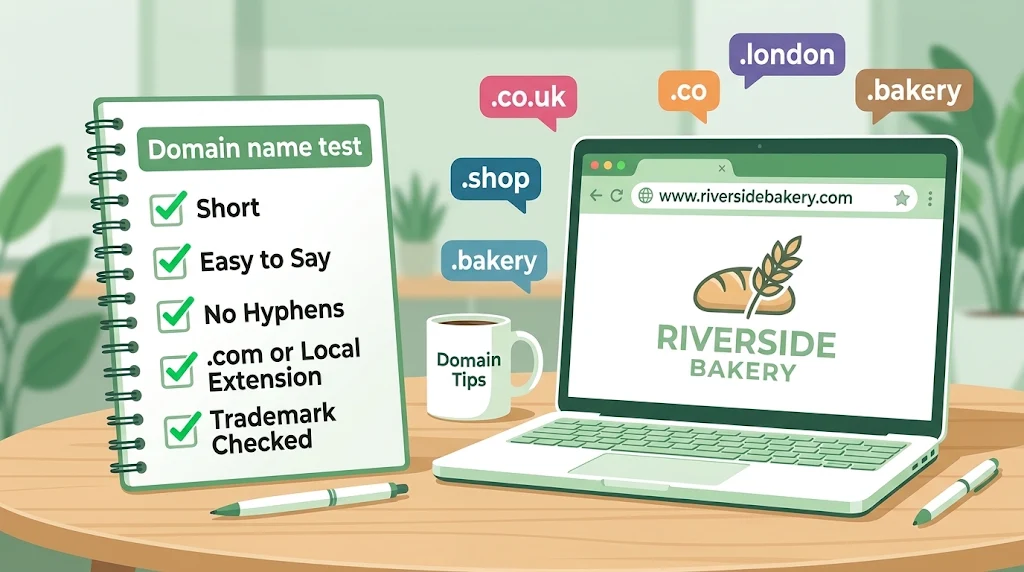
Brand Name or Keyword Domain?
For a local business, a brand name domain is almost always the better choice. Keyword domains used to rank better, but that advantage disappeared years ago, and they make it harder for customers to tell you apart from competitors with similar names.
Brand name (bloomandstem.com) | Keyword domain (leedsflowershop.com) | |
|---|---|---|
Search ranking | No disadvantage | No ranking bonus |
Memorability | High, matches your sign and reviews | Lower, sounds like many competitors |
Trust | Looks like a real business | Can look generic or spammy |
Room to grow | Works if you add services or move | Tied to one service or place |
When it makes sense | Almost always | Only if the keyword is your actual trading name |
Common Domain Name Mistakes
Avoid these
Names that read as something else when the words run together. Paying a high "premium" price without trying a town or trade variation first. Picking an unusual extension because the .com is taken by a business in your own trade. Letting a web designer choose and register the name on their account.
Accidental words. Read the name as one string of letters. Two harmless words can run together into a third, unwanted one, so ask a friend to read it cold. Capital letters on your sign do not help when people type in lowercase.
Copying a competitor. A name one letter away from a nearby business confuses customers and can invite a legal complaint.
Overpaying for premium names. A short dictionary word can cost thousands. For a local business, name plus town usually works just as well for the price of a normal registration.
Waiting too long. Once you have chosen, register it the same day. Good names do get taken.
Test Your Shortlist in Five Minutes
Write down three options that pass the rules above.
Say each one to a friend over the phone and ask them to type it. Drop any they get wrong.
Search each at a registrar to check it is available and see the renewal price.
Search the trademark database and the web for the same name in your trade.
Check the Instagram and Facebook handles.
Picture it on your van, your sign and your Google profile, then pick the one that looks most like your business.
Once You Have Chosen
Register the domain in your own name, on an account you control, with auto-renew and privacy protection turned on. A .com should cost roughly $11 to $25 a year in late 2026, so compare renewal prices and skip the checkout upsells. Our guide to buying a domain name walks through each step. Then connect the domain to your website: if you are still choosing a platform, our Wix vs Squarespace comparison covers how each handles domains, and our breakdown of what a website costs in 2026 shows where the domain fits in your yearly budget.
If your old site was a free Google business.site page, a domain you own is the fix: Google shut those sites down in 2024, and a name you control cannot disappear that way.
Put a Real Website on Your New Domain
A good domain only works if customers land on a page that shows your services, hours, reviews and a way to call or book. Entro is an AI website builder for local and small businesses. Paste your Google Maps link and Entro builds a complete, editable website in about a minute from your real photos, reviews, hours and business details. Every section can be edited with AI in plain language, and it is free to start, so you see the finished site before paying. When you are ready, you publish it on the domain you just chose.
Pros
- Builds a full website from your Google Maps link in about a minute
- Your photos, reviews, hours and services are filled in for you
- Every section can be edited with AI in plain language
- Publish on your own custom domain
- Free to start, so you see the finished site before buying anything
Cons
- Not built for large online stores or complex integrations
- Works best when your Google listing already has photos and reviews
- You choose and register the domain yourself; Entro does not name your business for you
Not right for you if…
You need a large online store, a content-heavy blog or deep third-party integrations. Shopify, WordPress or Wix fit those jobs better.
Our verdict
Pick a short domain that matches your business name, on .com or your country extension, and register it in your own name. For a local business on Google Maps, Entro lets you see the finished website first, free, before you spend anything on publishing it to that domain.
Pricing | Best for |
|---|---|
Free to start. Publishing and custom domain plans are listed on the pricing page. | Local businesses on Google Maps (shops, cafés, salons, clinics, trades) that want a site on their own domain quickly |
Keeping costs low? Our guide to the cheapest way to build a local business website covers domains, builders and the hidden extras.
Picked your name? See your site on it
Paste your Google Maps link and Entro builds a complete, editable site from your photos, reviews and hours in about a minute. Free to start.
Frequently asked questions
Start with your business name, keep it short and easy to spell when heard aloud, avoid hyphens and numbers, choose .com or your country extension, and check trademarks and social handles. If the name is taken, add your town or trade, such as riversidebakeryleeds.com.
Yes, as closely as possible. Customers remember and search for your business name, so a matching domain is easier to find and builds trust across your sign, Google profile and reviews.
Add your town or trade, add a short action word such as visit or eat, or use your country domain such as .co.uk or .ca. Avoid hyphens, numbers and names that are one letter away from another business.
No. Google's John Mueller has said there is no ranking bonus for keywords in a domain. Rankings come from your content, links, reviews and Google Business Profile, so a brand name domain is usually the better choice.
For most businesses, yes, because people type it by habit. About 166.6 million .com domains were registered at the end of June 2026. A country extension is equally good for a business that serves one country.
Aim for 15 characters or fewer before the extension and no more than two or three words. Domains can technically be up to 63 characters before the dot, but long names are mistyped and forgotten.
Usually not. Hyphens are easy to forget when typing and awkward to say aloud. Adding a word such as your town is normally better than adding a hyphen.
Yes. Owning a domain does not give you the right to a trademarked name. Search your country's trademark database, such as USPTO Trademark Search or the UK IPO, and search the web for businesses in your trade with the same name.
Only where it helps. If you serve one country, owning both the .com and your country domain is sensible, as is a common misspelling of a hard-to-spell name. Bundles of .net, .biz and .info are rarely worth it.
Written by
Cyrus
Head of Marketing, Entro
Cyrus writes about mobile app marketing, ASO, and conversion optimization. He's spent the last 3+ years helping indie developers and startup founders get more downloads from organic channels, without paid UA budgets.
Before Entro, he ran growth for two consumer apps that together passed 500,000 downloads on the App Store. Most of what he writes comes from mistakes made with his own money first.
Related articles