Landing Page vs Website: Which Does Your Business Need? (2026)
A website is your business's full home online with several pages for different visitors; a landing page is a single page built for one goal, usually from an ad or campaign. Most local businesses need a website first and add landing pages when they run ads or promotions.

Cyrus
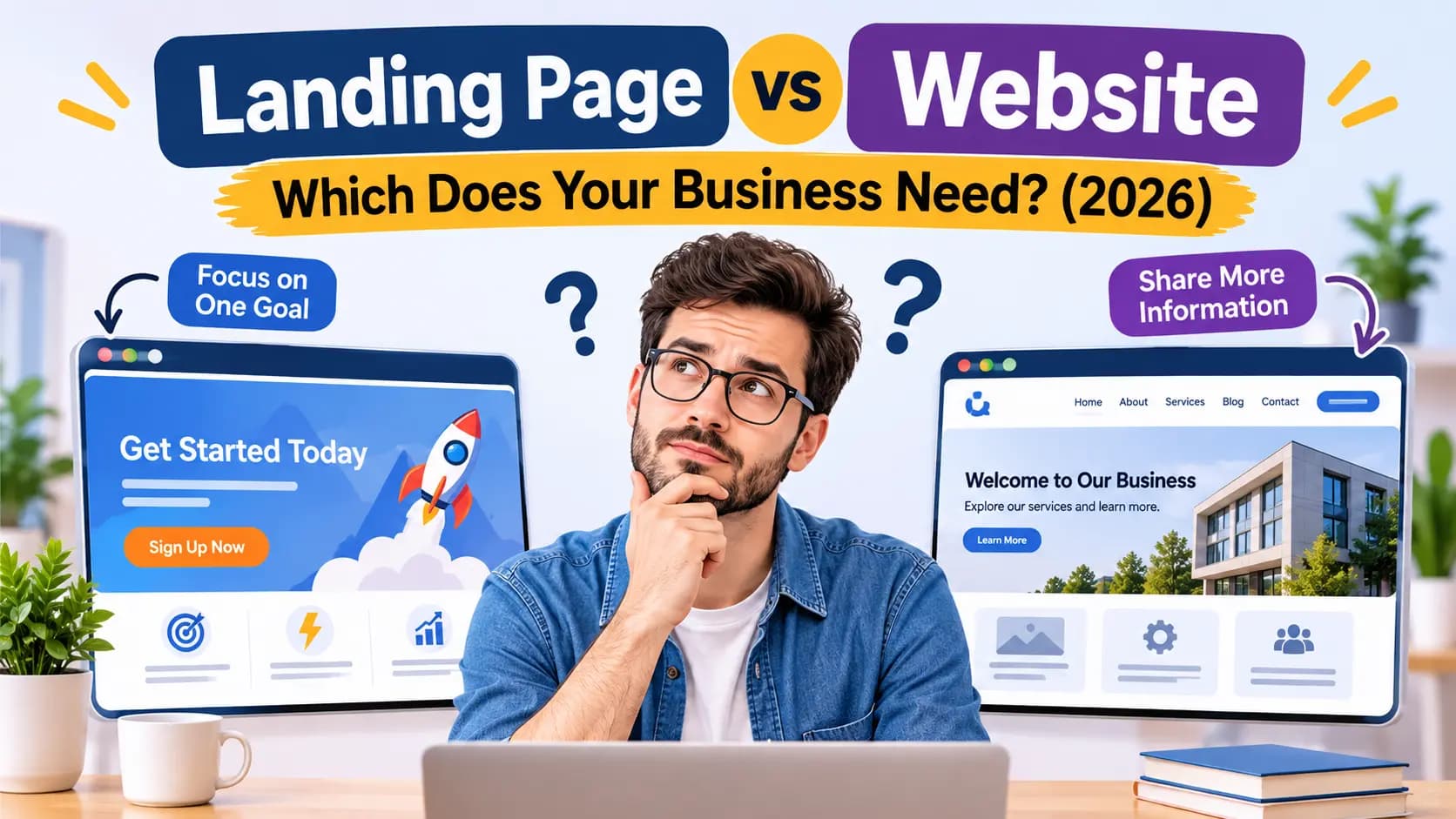
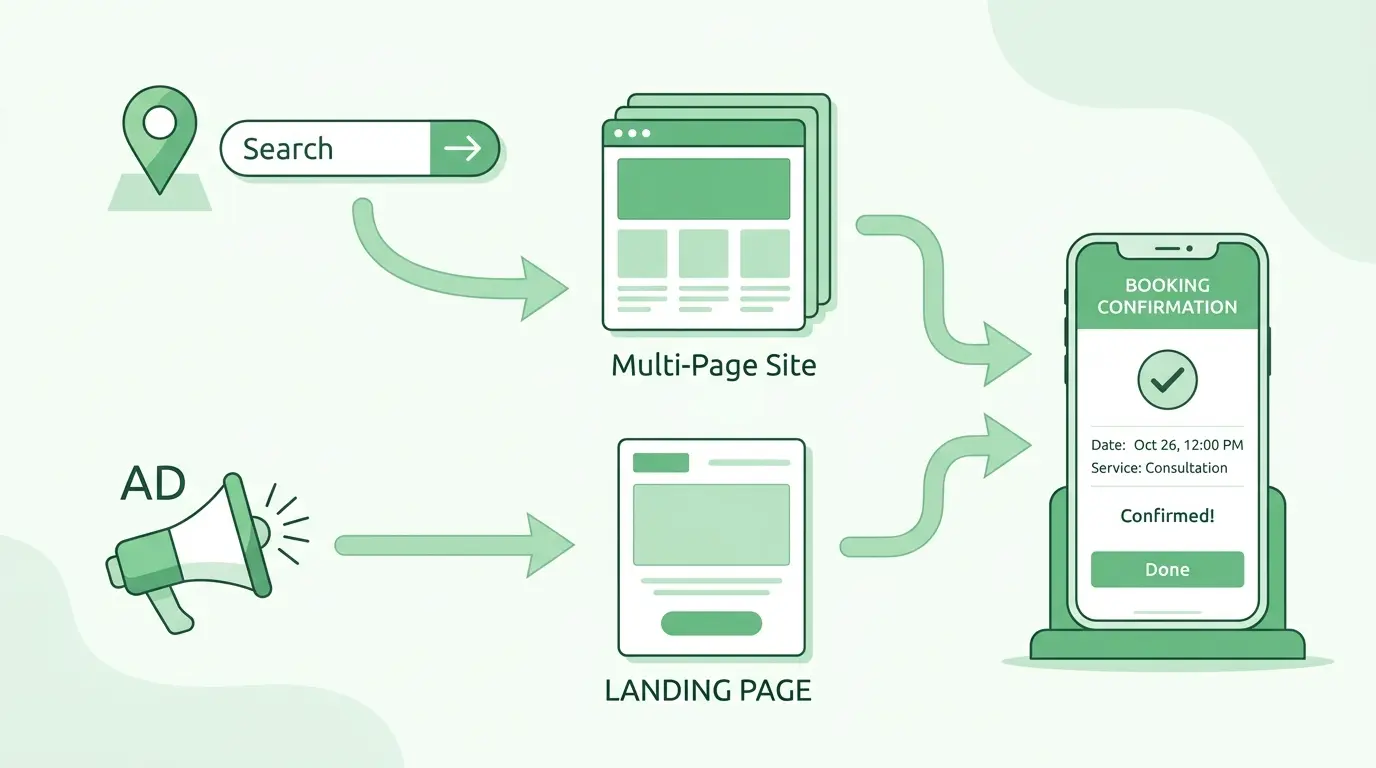
A website is your business's complete home online: several pages, a navigation menu and information for many kinds of visitors, from first-time browsers to returning customers. A landing page is a single page built for one goal, such as booking a free consultation or claiming an offer, usually reached from an ad, email or campaign, with no menu and one call to action. Most local and small businesses need a website first, because it is what your Google Business Profile, search results and word-of-mouth point to, and then add landing pages when they run ads or promotions. Builders such as Entro, Wix and Squarespace make websites; tools such as Unbounce, Leadpages and Carrd focus on landing pages. Landing pages convert well for their single job: Unbounce's 2024 benchmark put the median landing page conversion rate at 6.6% across 41,000 pages.
Key takeaways
- A website informs many visitors about many things. A landing page asks one visitor to do one thing.
- Local businesses need a website first: it anchors your Google profile, search visibility and trust.
- Add a landing page when you pay for traffic or run a campaign with a single offer.
- A one-page website is not the same as a landing page; it still covers hours, services, reviews and contact.
- Google Ads scores landing page experience as part of Quality Score, so a focused page can lower ad costs.
- Many businesses do best with both: a website for discovery and trust, landing pages for campaigns.
What Is a Website?
A website is a collection of linked pages under your own domain that explains who you are, what you offer, where and when, and how to reach you. It usually has a homepage, a page per service, an about page and a contact page, connected by a menu. It serves many visitors at once: someone comparing prices, someone checking your hours, someone reading reviews before calling. It also builds search visibility over time, because each page can rank for different searches.
What Is a Landing Page?
A landing page is a standalone page designed for one action. Visitors usually arrive from a specific ad, email, social post or QR code, and the page repeats that exact message: one headline, one offer, proof that supports it, and one button. It typically removes the main menu and other links so attention stays on the goal. A landing page is temporary or campaign-specific and is not meant to explain your whole business.
Landing Page vs Website: The Differences
Website | Landing page | |
|---|---|---|
Purpose | Inform and build trust with many visitors | Get one type of visitor to take one action |
Pages | Several, linked by a menu | One |
Navigation | Full menu and links | Usually none, or minimal |
Calls to action | Several (call, book, directions, shop) | One |
Traffic source | Google search, Google Maps, word of mouth, direct visits | Ads, emails, social campaigns, QR codes |
Lifespan | Permanent, updated over time | Often for one campaign or season |
Search visibility | Builds organic rankings across many searches | Rarely ranks on its own; usually paid traffic |
Best measured by | Calls, bookings, enquiries and visits overall | Conversion rate for one offer |
Which Does Your Business Need?
You need a website if
Customers find you on Google Maps or search. Your Google Business Profile needs a website to link to, and Google treats a website as part of a complete profile.
You offer more than one service or product and people need to compare.
People check hours, location, prices or reviews before they visit or call.
You want to show up for searches beyond your business name, such as "emergency plumber in Leeds".
You need a landing page if
You run Google, Meta or other paid ads for a specific offer.
You are promoting a time-limited campaign: a seasonal menu, a launch, an event, a free consultation.
You want to collect sign-ups for a waitlist, newsletter or download.
You are testing whether people want a new service before building it into your website.
You need both if
You have a permanent business and also run campaigns. The website handles everyone who searches for you or hears about you; the landing page handles people who click a specific ad. This is the most common setup for local businesses that advertise.
Situation | What to build |
|---|---|
New café, salon or shop on Google Maps | Website first |
Dentist running Google Ads for implants | Website plus a landing page for the implant offer |
Plumber covering one town, no ads | Website with a page per main service |
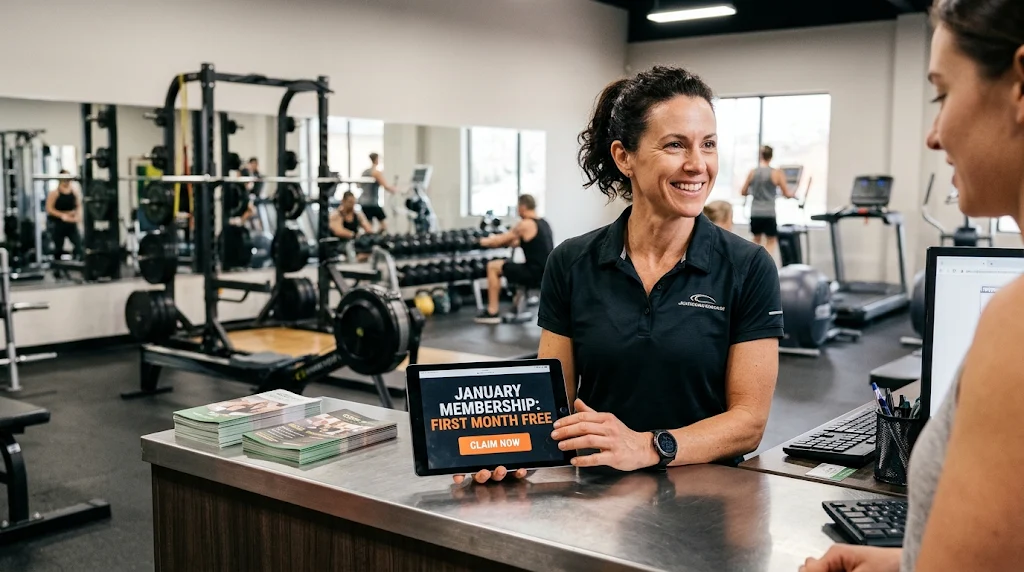
Gym running a January membership offer | Landing page for the offer, linked from the website |
Freelancer testing a new package | Landing page, then add to the website if it sells |
Mobile app before launch | Landing page to collect sign-ups |
Is a One-Page Website the Same as a Landing Page?
No. A one-page website can look similar, but it does a website's job on a single scrolling page: it shows your services, hours, location, reviews and contact options, and it may have a menu that jumps to each section. A landing page leaves most of that out on purpose. For a small local business, a well-structured one-page website is often enough to start, and our high-converting website layout guide shows the section order that works. Add pages as you add services.
What a Good Landing Page Includes
A headline that matches the ad. If the ad says "Free first consultation in Leeds", the page should say the same.
One offer and one button. "Book your free consultation", repeated at the top and bottom.
Proof: reviews, before-and-after photos, numbers or logos of clients.
Short answers to objections: price, time, location, what happens next.
A short form or tap-to-call. Ask only for what you need.
Fast loading on phones. Most ad clicks come from mobile.
Ad platforms reward this focus. Google Ads uses landing page experience, alongside expected click-through rate and ad relevance, to calculate Quality Score, which affects how much you pay per click and where your ads appear.
Common mistake
Sending paid ad clicks to your homepage. Visitors who clicked a specific offer land on a general page, cannot find the offer and leave. Either send them to a dedicated landing page or to the specific service page that matches the ad.
Cost and Effort
A landing page is quicker to make, often an hour or two in a landing page tool or your website builder. A website takes longer because it covers more, but modern builders have shortened that a lot. Our breakdown of how much a website costs in 2026 covers website costs, and our checklist of what every small shop website needs lists what a local business site should include. If you are choosing a website builder, our Wix vs Squarespace comparison covers two of the most popular options, both of which can also make standalone landing pages.
Start With the Website: Entro
Entro is an AI website builder for local and small businesses. Paste your Google Maps link and Entro builds a complete, editable website in about a minute from your real photos, reviews, hours and business details. Every section can be edited with AI in plain language, and it is free to start, so you see the finished site before paying. Entro also makes landing pages for apps and games from a store listing, covered in our guide to the best app landing page tools.
Pros
- Builds a full website from your Google Maps link in about a minute
- Your photos, reviews, hours and services are filled in for you
- Every section can be edited with AI in plain language
- Publish on your own custom domain
- Free to start, so you see the finished site before buying anything
Cons
- Not built for large online stores or complex integrations
- Works best when your Google listing already has photos and reviews
- Not a dedicated ad landing page tool with A/B testing like Unbounce
Not right for you if…
You need a large online store, a content-heavy blog or deep third-party integrations. Shopify, WordPress or Wix fit those jobs better.
Our verdict
If customers find you on Google Maps or search, build a website first; a landing page cannot replace it. Add landing pages when you pay for ads or run a specific offer. Entro gets the website part done from your Google listing in about a minute, free to start.
Pricing | Best for |
|---|---|
Free to start. Publishing and custom domain plans are listed on the pricing page. | Local businesses on Google Maps (shops, cafés, salons, clinics, trades) that need a real website before running campaigns |
Watching the budget? Our guide to the cheapest way to build a local business website compares the low-cost routes.
Get the website part done first
Paste your Google Maps link and Entro builds a complete, editable site from your photos, reviews and hours in about a minute. Free to start.
Frequently asked questions
A website is a set of linked pages that explains your whole business to many kinds of visitors. A landing page is a single page with one goal and one call to action, usually for visitors arriving from an ad, email or campaign.
If customers find you on Google Maps or search, you need a website first. Add a landing page when you run paid ads or a campaign for one specific offer. Many businesses use both.
Not for most local businesses. A landing page leaves out hours, services, location and other details customers look for, and it rarely ranks in search. It works as a temporary page for a single offer or a pre-launch product.
No. A one-page website covers the jobs of a full website, such as services, hours, reviews and contact, on one scrolling page. A landing page focuses on a single action and leaves the rest out.
Send it to a landing page or the specific service page that matches the ad. Google Ads includes landing page experience in Quality Score, so a relevant, focused page can improve ad position and cost.
Unbounce's 2024 benchmark report found a median landing page conversion rate of 6.6% across about 41,000 pages, with wide variation by industry and offer. Compare against your own previous campaigns rather than a single number.
Usually only a little. Landing pages are short, focused and often have no links from the rest of the site, so they rarely rank. Service pages on your website are better for organic search.
Usually a homepage, a page per main service, an about page and a contact page. A one-page site can work at first if it covers services, hours, reviews and contact clearly.
Yes. Most builders, including Wix and Squarespace, let you create a standalone page and hide it from the menu. Dedicated tools such as Unbounce and Leadpages add features like A/B testing for ad campaigns.
Written by
Cyrus
Head of Marketing, Entro
Cyrus writes about mobile app marketing, ASO, and conversion optimization. He's spent the last 3+ years helping indie developers and startup founders get more downloads from organic channels, without paid UA budgets.
Before Entro, he ran growth for two consumer apps that together passed 500,000 downloads on the App Store. Most of what he writes comes from mistakes made with his own money first.
Related articles