Why Your App Store Description Makes a Bad Landing Page
Your App Store description makes a poor landing page because it is written to rank, not to persuade. Cold visitors respond to outcomes and real user language, so review-based copy converts far better than a pasted store description.

Cyrus
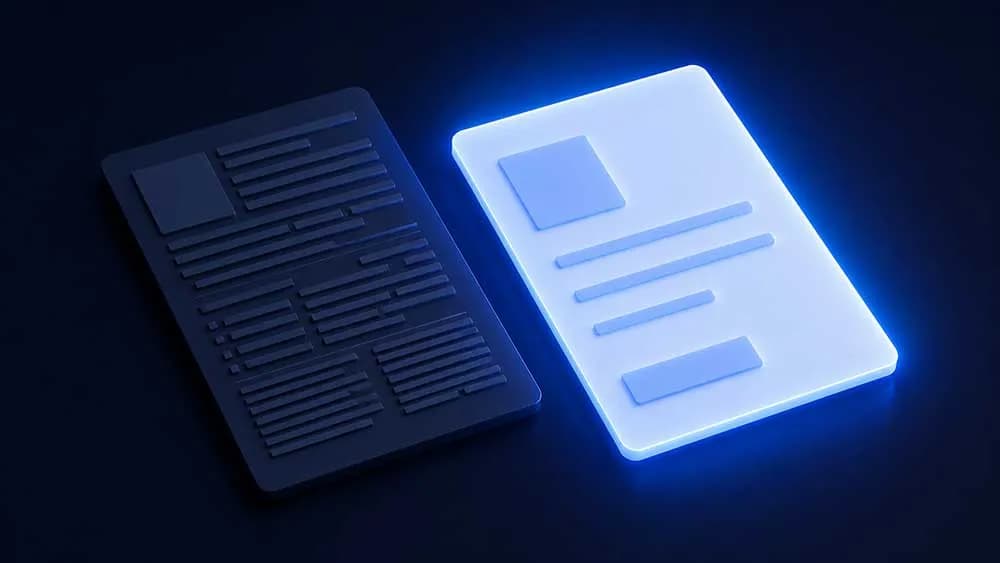
Your App Store description makes a poor landing page because it is written to rank in store search, not to persuade cold visitors. Keyword-dense feature lists rank well, but strangers arriving from an ad or a link respond to outcomes and real user language, which is why review-based copy converts cold traffic better than a pasted store description.
You spent two hours polishing your app store description.
It's keyword-rich, it hits the feature list, it fits the character limit. Then you paste it into a landing page and wonder why nobody clicks Install.The description didn't fail. You used the wrong source material.
The App Store Description Is Written for Robots, Not Buyers
ASO copy has one job: rank. You stuff in "meditation timer with sleep sounds" and "focus music for studying" because that's what the search index rewards. The sentences are dense. The tone is formal. Every line is fighting for a keyword slot.
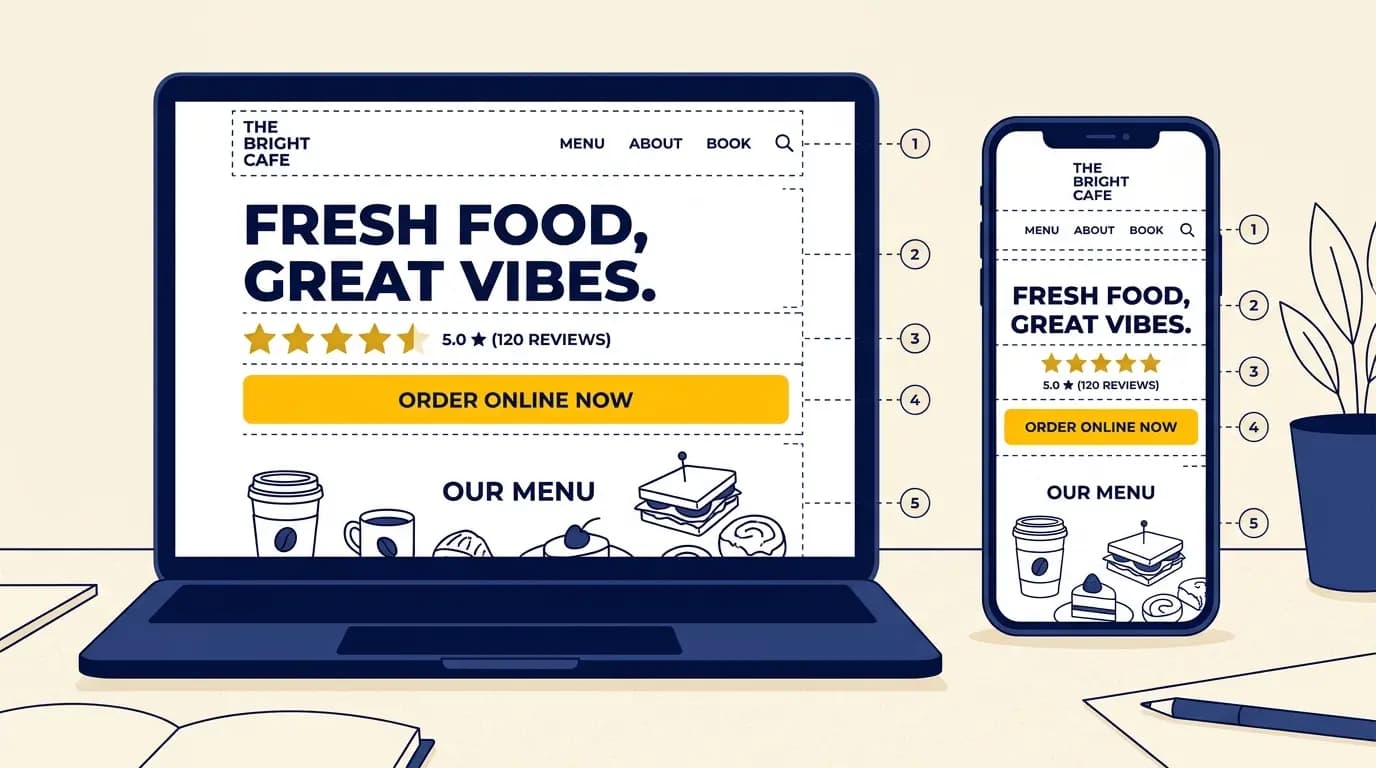
Cold web traffic is different. Someone lands on your page from a Facebook ad or a Reddit post. They don't know your app exists. They owe you nothing. You have about four seconds before they close the tab.
A description that says "Feature-rich productivity suite with customizable Pomodoro intervals and cloud sync across devices" does nothing for that person. It answers the question nobody asked.
The question cold traffic is actually asking: "Will this make my life better, and can I trust that claim?"
Keyword-stuffed feature lists don't answer that.
What Cold Traffic Actually Responds To
Reviews do.
Not your reviews cleaned up and paraphrased. The raw language your actual users chose when they were sitting alone deciding whether to keep your app or delete it.
A meditation app review that says "I finally fell asleep before 2am after three years of insomnia" is worth more than any headline you'll write yourself. It's specific. It's emotional. It's a person talking to another person.
This is the insight behind turning your App Store listing into a landing page that actually converts cold traffic. The listing isn't the asset. The reviews buried inside it are.
The description is a byproduct of ASO. Reviews are a byproduct of people caring about your app. Those are different things entirely.
The Copy Mismatch That Kills Conversions
Here's what most indie devs do in 2026. They build the app, write the store listing, screenshot a few screens, drop everything into a Notion page or a basic Webflow template, and call it a landing page.
The result is a page that talks about features when buyers need outcomes. It talks about the app when buyers need to see themselves using it. It uses developer language when buyers use human language.
Take a language learning app. The store description might say: "Spaced repetition algorithm with 40,000 vocabulary cards across 12 languages and offline mode."
A real review might say: "I ordered food in Tokyo without pulling out my phone. Six months ago I couldn't say hello."
One of those closes the sale. The other one is furniture.
This problem gets worse when you consider how screenshots fit into the page. Visuals need to support the emotional claim, not just show the UI. If your copy is feature-dense and your screenshots are raw simulator frames, you've built a page that speaks entirely to people who already want your app. Those people are already in the App Store. Your landing page isn't for them.
| Factor | App Store description | Landing page copy |
|---|---|---|
| Written for | The store search algorithm | A stranger deciding in seconds |
| Main goal | Rank for keywords | Earn trust and an install |
| Language | Features and keywords | Outcomes in users' own words |
| Best source | Your keyword research | Your reviews and support emails |
| Proof | Rating shown by the store | Specific review quotes near the top |
What to Use Instead of the Description
Three sources beat your app store description every time.
Review language. Pull the 4-star and 5-star reviews. Look for the sentence that contains a before-and-after. That's your headline.
Support emails. The person who emailed you "does this work on iPad Pro" is telling you exactly what their objection is. Put the answer above the fold.
One-sentence pitches. Ask three people who've never used your app to describe it after watching your preview video for 30 seconds. Their words are closer to buyer language than anything you wrote.
The goal is to get out of your own head. You know too much about the app. You care about the implementation details. Your buyers don't, and they never will.
If you're a game dev, this problem is even more pronounced. Players respond to vibes, not feature matrices. The landing page approach that works for indie games is almost entirely built on social proof and emotional pull, not spec sheets.
Reusing your store description: pros
- Already written and approved
- Accurate list of features
- Consistent with your store listing
Reusing your store description: cons
- Keyword-dense and hard to read for people
- Talks about features instead of outcomes
- Lacks the social proof cold visitors need
How to Rewrite Your Landing Page Copy in an Hour
Export your 4 and 5 star reviews
Look for sentences with a clear before and after. These are your headline candidates.
Pick one outcome for the headline
Lead with what changes for the user, then support it with one line about how.
Answer the top objection above the fold
Use your support emails to find the question people ask before installing.
Place two or three review quotes near the top
Specific quotes do more than a star rating alone.
Keep features for further down
List them briefly after the outcome and proof, for visitors who want detail.
The 2026 Shortcut Most Devs Haven't Used Yet
Mining reviews manually and turning them into structured landing page copy takes three to five hours if you're doing it right. You're reading through hundreds of reviews, tagging themes, writing headlines that mirror the language, then building the actual page.
Most solo founders don't have five hours. They have a shipping queue and a Slack full of bug reports.
This is exactly what Entro, an AI landing page builder for apps, is built to do. You point it at your App Store or Google Play listing,
and it pulls the review language, identifies the strongest social proof, and generates a landing page in under a minute. The copy comes from your users, not from a template.The output isn't a generic page. It's built from what real people said about your specific app, structured to convert cold traffic that has never heard of you.
For a fuller comparison of how different tools handle this, the breakdown of landing page builders for mobile developers covers pricing, custom domains, and what each tool actually generates.
The One Change That Matters Most
Stop treating your app store description as a content asset. It was never written to sell to strangers. It was written to rank.
Your reviews were written by people who were strangers once, and then weren't. That's the copy that converts.
If you want to see what a review-driven landing page looks like before you build one, the full walkthrough of what actually works in 2026 breaks down the structure in detail. Entro can generate the page itself in the time it takes to make coffee.
Updated October 2026.
Frequently asked questions
You can, but it usually converts poorly. Store descriptions are written to rank for keywords, so they read as dense feature lists. Cold visitors respond better to outcomes, specific review quotes and an answer to their main objection.
ASO copy is written for the store's search algorithm, so it prioritises keywords and features. Landing page copy is written for a stranger deciding in a few seconds, so it leads with outcomes, social proof and a clear call to install.
Use review language, support emails and simple one-sentence pitches from people who have never used the app. Reviews with a clear before and after make the strongest headlines, and support emails reveal the objections to answer above the fold.
Export your 4 and 5 star reviews, highlight sentences that describe a specific outcome, use the strongest as your headline, and place two or three quotes near the top. Tools such as Entro automate this by reading your store listing and generating copy from the reviews.
Most talk about features in developer language and show raw screenshots, which only persuades people who already want the app. Cold visitors need to see the outcome, trust the claim through real reviews, and find the download button quickly.
It should state the main outcome for the user in plain words, ideally borrowed from a real review, such as getting to sleep faster or learning a language well enough to order food. Avoid naming features in the headline.
Yes. Your store description matters for store search and for visitors who are already on the listing. Keep it keyword-focused for ASO, and write separate, outcome-led copy for your landing page.
Doing it by hand usually takes three to five hours: reading reviews, tagging themes, writing headlines and building the page. Entro does it automatically from your store link in under a minute.
Near the top, ideally just under the headline. Show your rating and review count plus two or three specific quotes, so visitors see proof before they scroll.
Written by
Cyrus
Head of Marketing, Entro
Cyrus writes about mobile app marketing, ASO, and conversion optimization. He's spent the last 3+ years helping indie developers and startup founders get more downloads from organic channels, without paid UA budgets.
Before Entro, he ran growth for two consumer apps that together passed 500,000 downloads on the App Store. Most of what he writes comes from mistakes made with his own money first.
Related articles